
Dreaming Together: How Art Opened a Conversation About Remembrance, Justice, and the Beloved Community
AAR&RI's final Breaking Bread gathering of 2026 brought community members together at the Anderson Arts Center for an evening of art, storytelling, listening, and shared reflection.
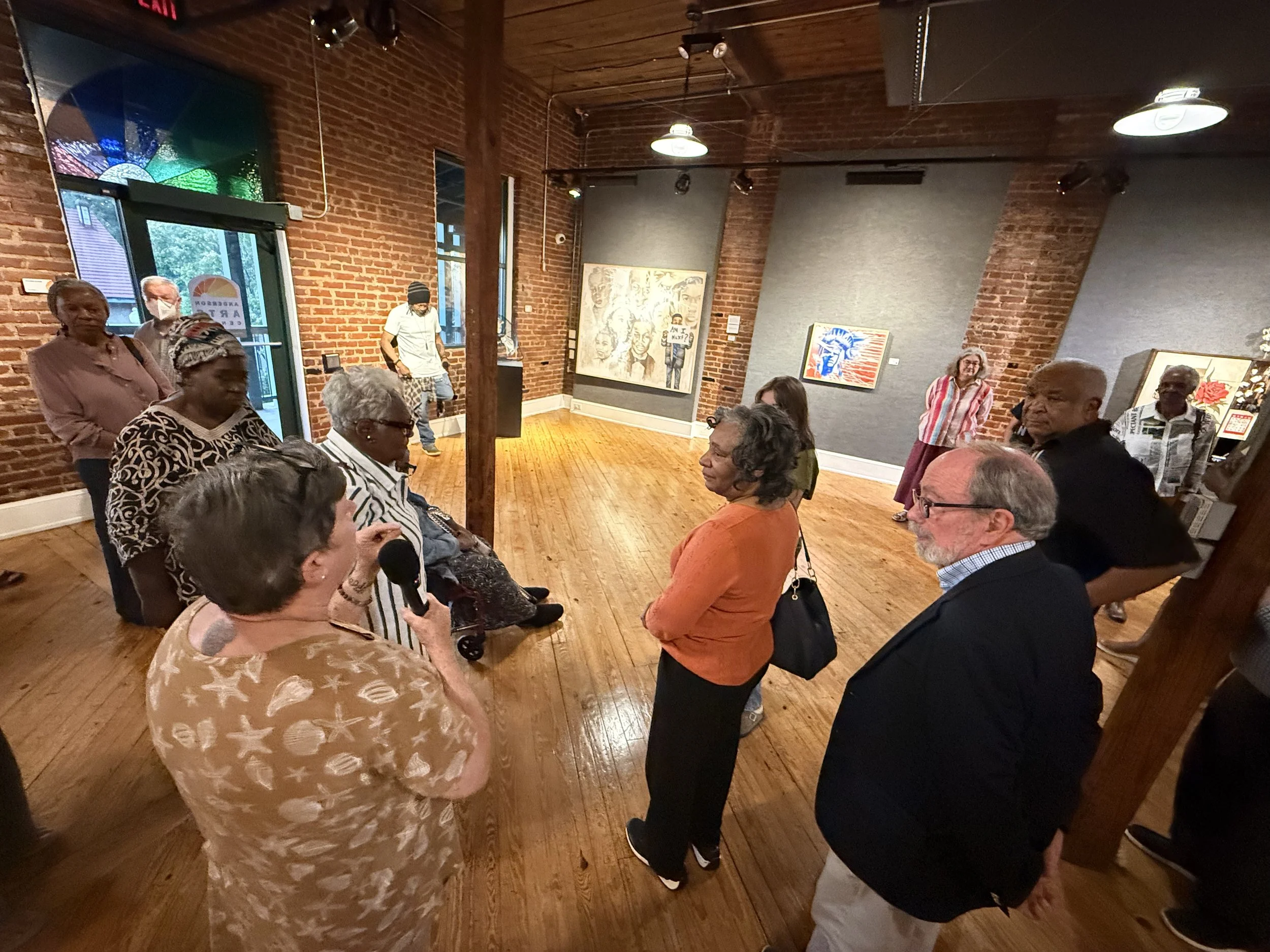
On Tuesday, October 13, the Anderson Area Remembrance & Reconciliation Initiative (AAR&RI) hosted Breaking Bread: Dreaming Together, an evening featuring Anderson artist Nat Morris and the exhibition Amerikan Dream, created in collaboration with fellow artist Shea Abramo.
The gathering marked the third installment of AAR&RI's 2026 Breaking Bread series. The first explored love, the second examined justice, and the final gathering invited participants to consider how art can help communities confront their histories, understand one another, and imagine a shared future.
What began as a moderated conversation with Morris evolved into an interactive experience as participants moved throughout the gallery, gathered around individual works of art, and shared personal interpretations shaped by their own memories, experiences, and perspectives.
The evening became an opportunity not only to experience art, but to practice the listening and understanding central to building the Beloved Community.
Remembering the Past
The gathering opened with a remembrance of Willis Jackson, a 17-year-old victim of racial terror lynching in Honea Path, South Carolina, on October 10, 1911.
The event took place just three days after the 115th anniversary of Jackson's death and two days before the anniversary of a significant sermon delivered by Rev. Dr. John F. Vines, then pastor of First Baptist Church in Anderson and later the second president of Anderson College.
On October 15, 1911, Vines publicly condemned the lynching, challenging the violence and moral contradictions of those responsible.
This remembrance established a central question for the evening:
What are we willing to confront about our past so that we can begin dreaming together about our future?
The Language of Art
Morris, who grew up in Anderson's Centerville community, shared stories about his childhood, his father's influence as a painter, and the experiences that helped shape his artistic expression.
Throughout the evening, participants discovered that art communicates in ways that extend beyond an artist's spoken explanations.
As the conversation moved from the front of the gallery to the artwork itself, participants were invited to share what they saw, remembered, and felt.
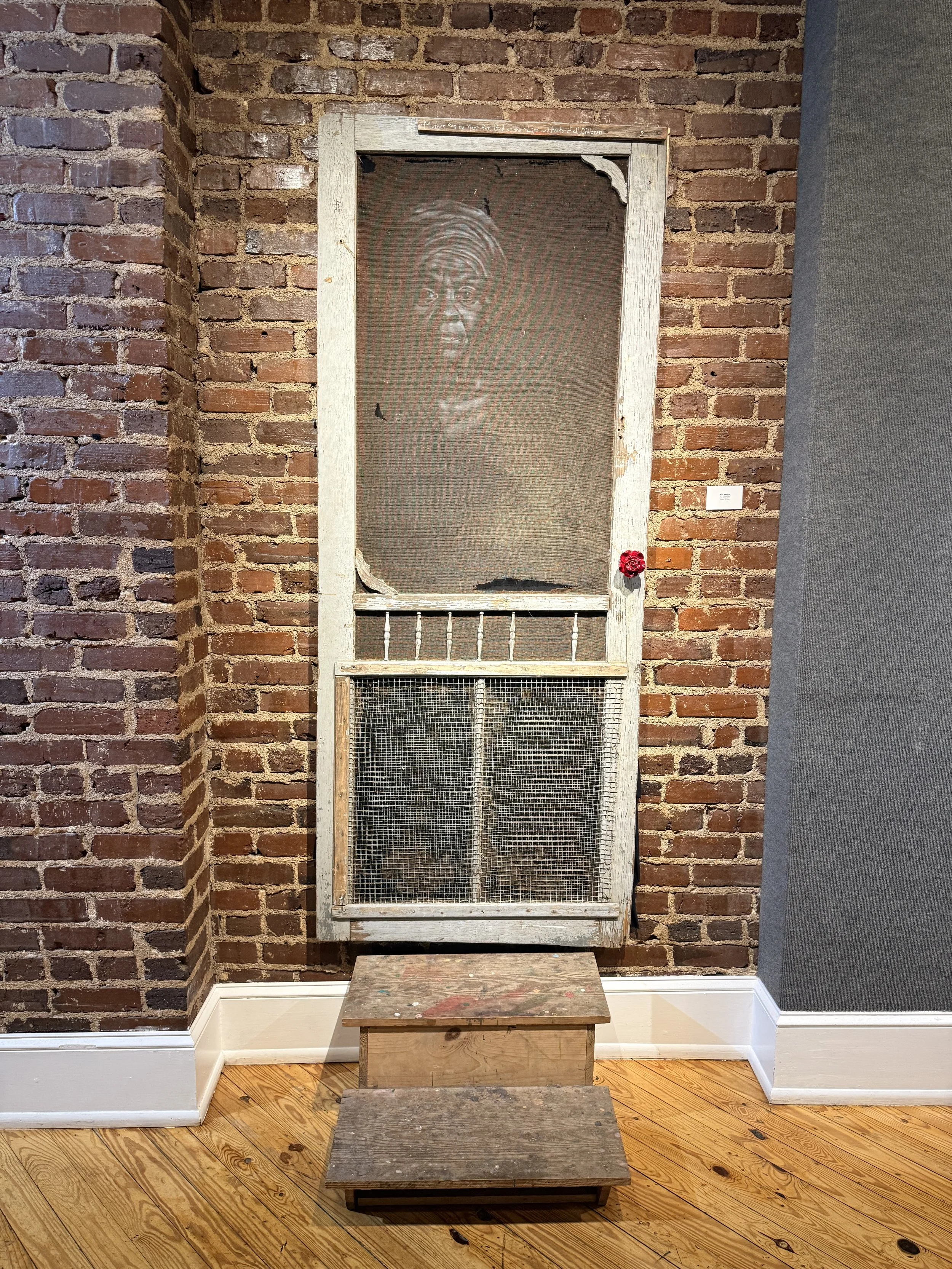
One of the first works explored featured the image of a woman behind an old screen door.
Morris described how the piece connected to memories of his grandmother and the familiar sights and sounds of childhood.
As participants gathered around the artwork, the conversation expanded.
Some saw their own grandmothers. Others remembered watching children through screen doors, hearing familiar sounds from childhood, or experiencing the protective presence of family members.
The artwork created a common point of connection while allowing each person to bring a different experience into the conversation.
Am I Next? A Conversation About Racial Violence and Remembrance
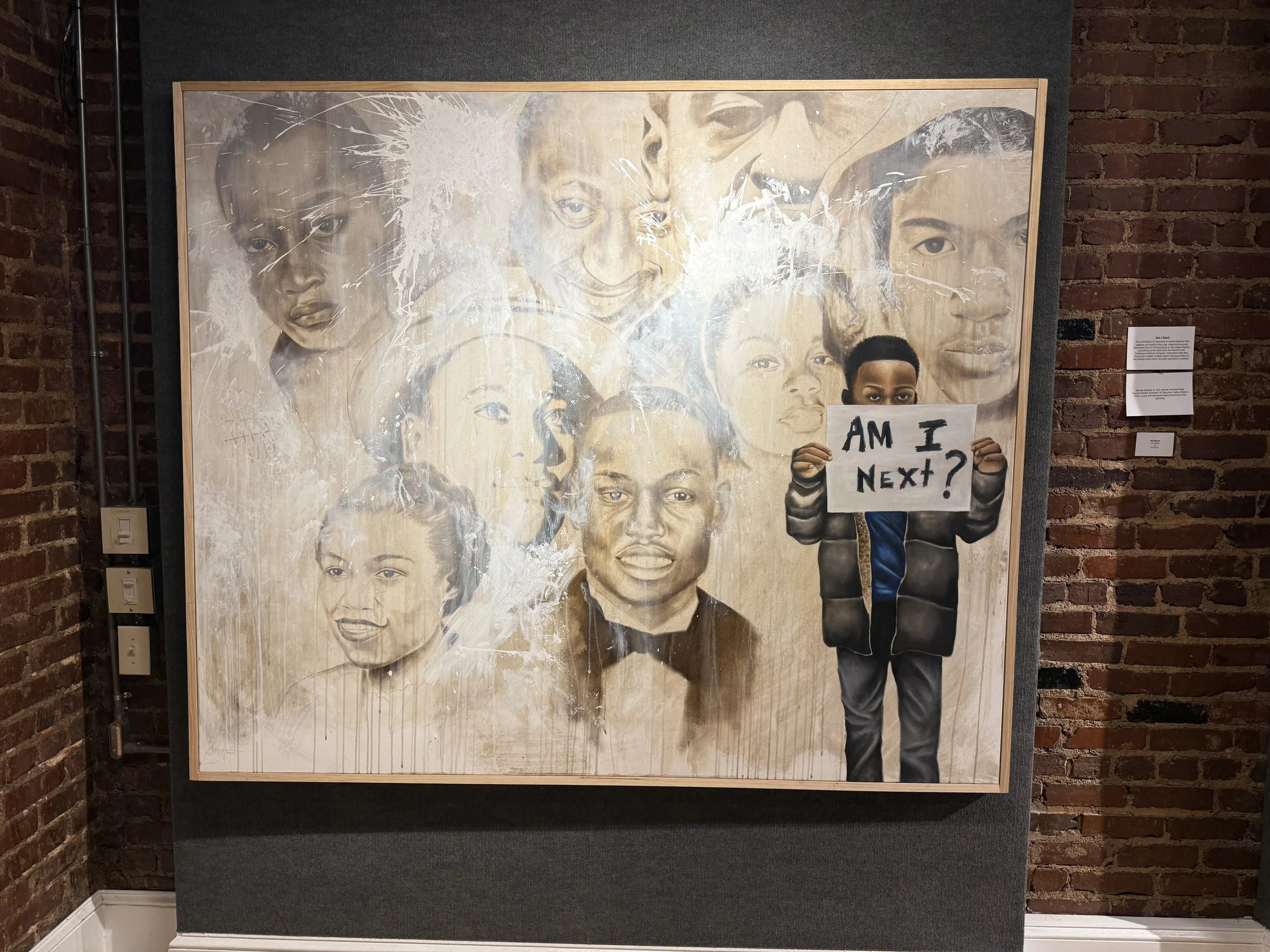
The group then moved to Morris's Am I Next?, a work featuring a young child surrounded by references to individuals whose lives were taken through racial violence.
Morris described how his childhood encounter with photographs and the story of Emmett Till influenced his understanding of racial injustice.
The artwork prompted a deeply personal conversation.
Black participants shared experiences and perspectives about racial violence, the fear of losing children, the persistence of racism, and the responsibility to remember those whose lives have been taken.
Others spoke about the importance of researching the individuals represented in the artwork and preserving their stories for future generations.
One participant observed that despite attempts to obscure the names and images within the artwork, their presence remained recognizable.
"The whitewashing didn't work."
The observation reinforced a central theme of AAR&RI's work: remembrance requires an ongoing commitment to confronting difficult histories and preserving the stories of those who have too often been forgotten.
But the conversation also revealed something important about listening across different experiences.
After several Black participants shared their interpretations, one woman invited white participants to describe what they saw in the same artwork.
The group paused to make room for additional perspectives.
A participant responded by describing the individuals represented in the work as a great cloud of witnesses, connecting his interpretation to his Christian faith.
The exchange demonstrated that people can encounter the same artwork through different experiences, histories, and beliefs.
Rather than requiring everyone to reach a single interpretation, the gathering created space for those perspectives to be shared and heard.
Creating Space for the Beloved Community
Throughout the evening, the conversation was shaped not only by Morris and the moderator, but also by the people gathered around the artwork.
Participants asked questions, shared memories, offered interpretations, and invited others into the discussion.
These exchanges reflected the purpose of Breaking Bread: bringing people together to create meaningful opportunities for listening, learning, and building relationships.
The evening also highlighted the Anderson Arts Center's commitment to providing a welcoming space for artwork that encourages community reflection and dialogue.
Representatives of the Arts Center shared how its partnership with AAR&RI has created opportunities for visitors to encounter local history, engage with challenging subjects, and consider perspectives beyond their own experiences.
The gallery became more than a place to display art. It became a place where people could gather around difficult questions and participate in conversations that matter to the community.
Continuing the Work of Remembrance and Reconciliation
Dreaming Together concluded AAR&RI's three-part Breaking Bread series for 2026.
Through conversations about love, justice, and art, the series invited participants to explore different dimensions of the Beloved Community and consider their own roles in advancing remembrance and reconciliation.
As the evening concluded, participants were invited to write or draw their reflections, carrying the experience beyond the gallery.
AAR&RI is exploring additional opportunities for community engagement in 2027, including gatherings that connect Community Remembrance Projects across South Carolina.
The evening offered a meaningful reminder that building the Beloved Community does not require everyone to share the same experiences or interpretations.
It requires a willingness to listen, to acknowledge difficult truths, and to make room for voices and perspectives beyond our own.
The artwork opened the conversation. The people gathered around it gave that conversation meaning. And together, they demonstrated what it can look like to begin building the Beloved Community.
AAR&RI extends its gratitude to Nat Morris, Shea Abramo, the Anderson Arts Center, and everyone who participated in this final Breaking Bread gathering of 2026.
