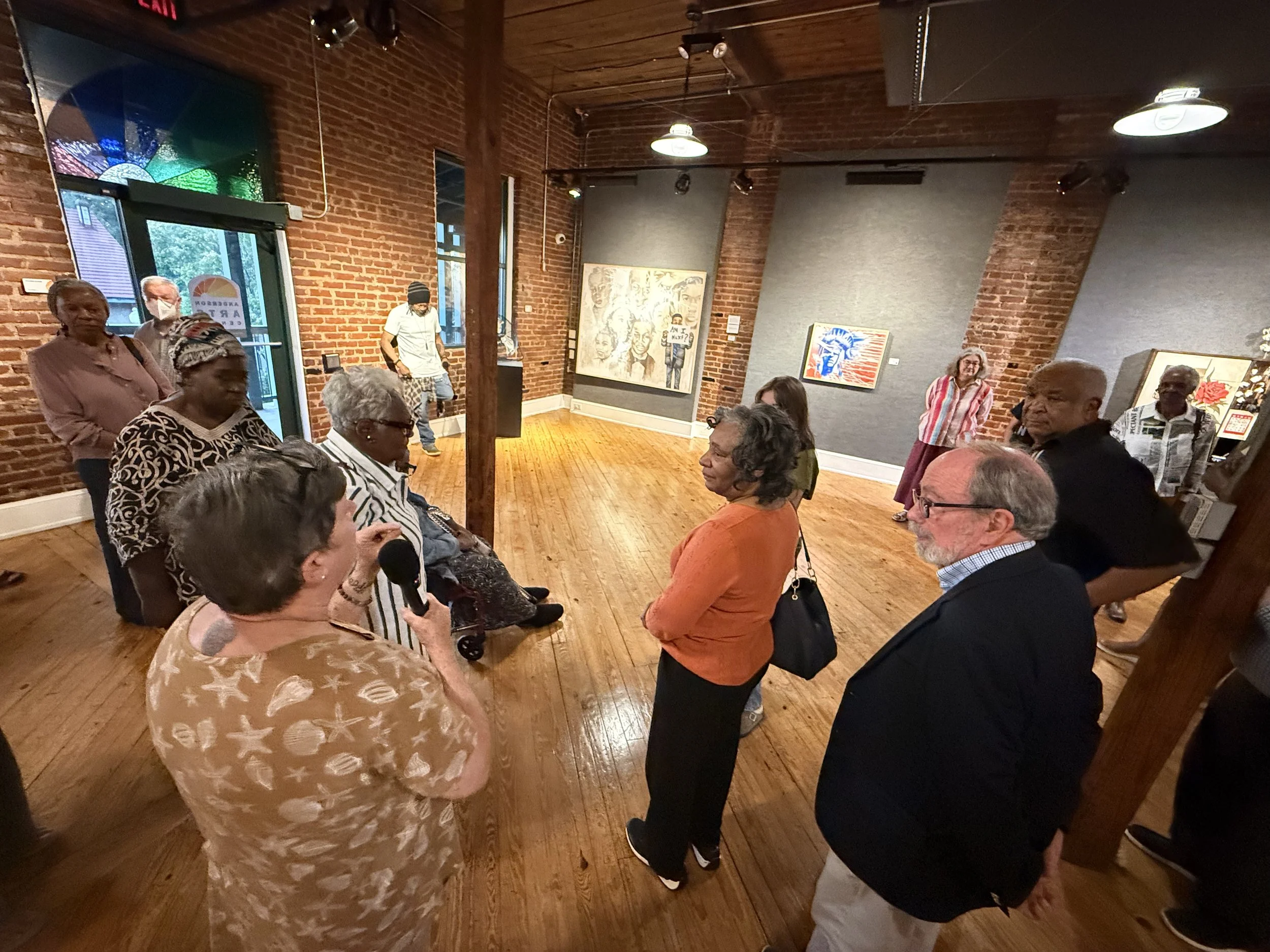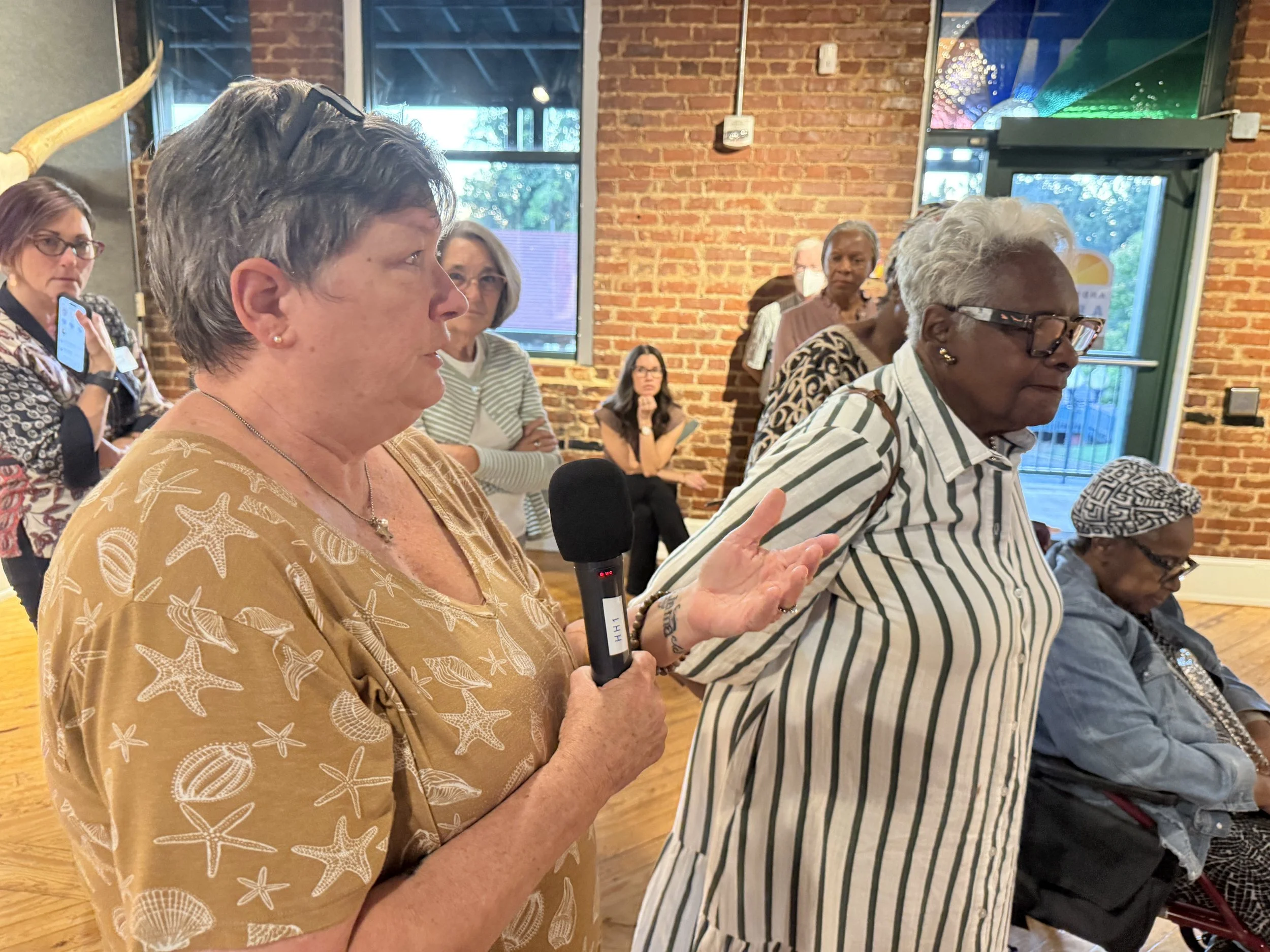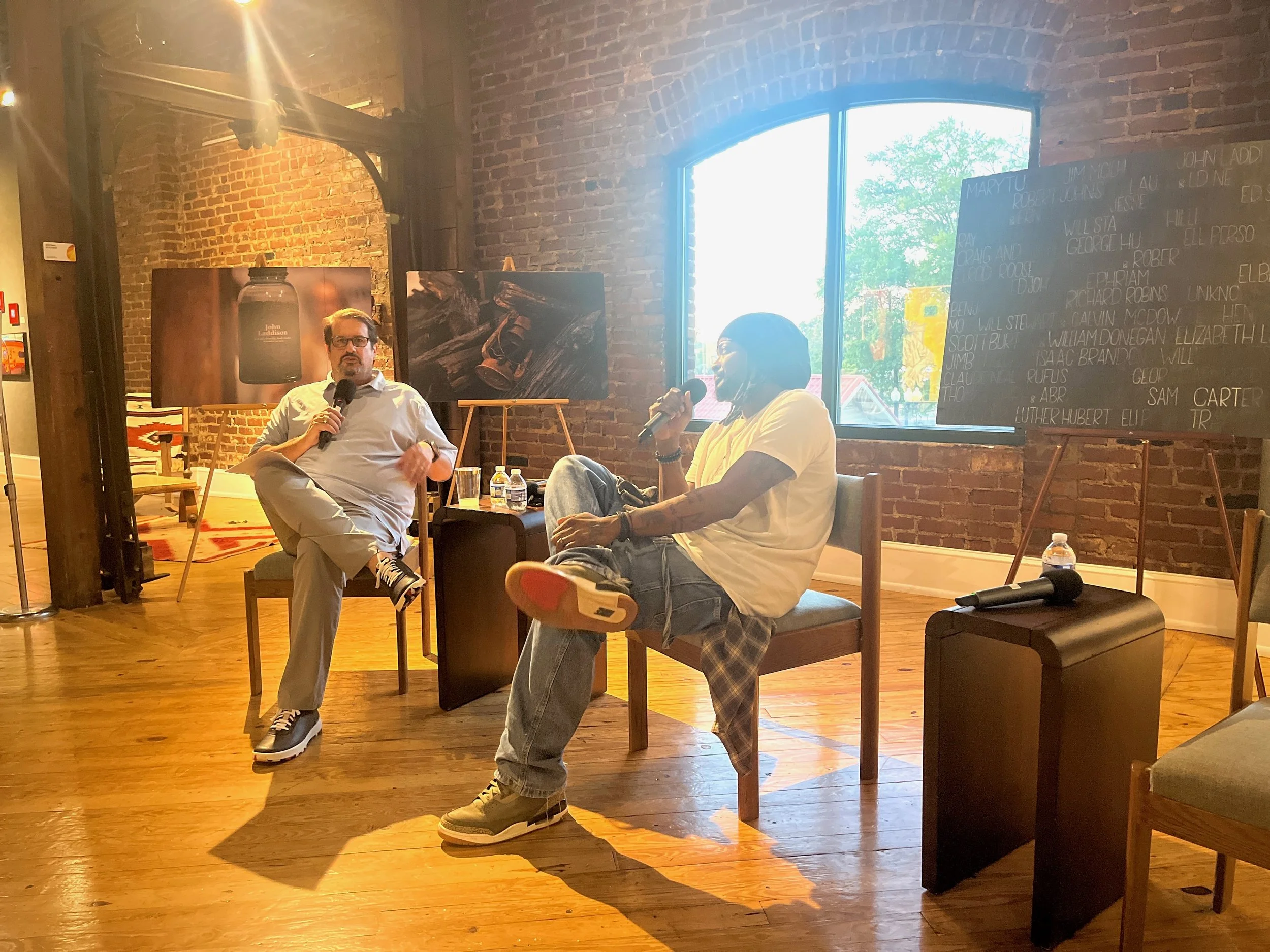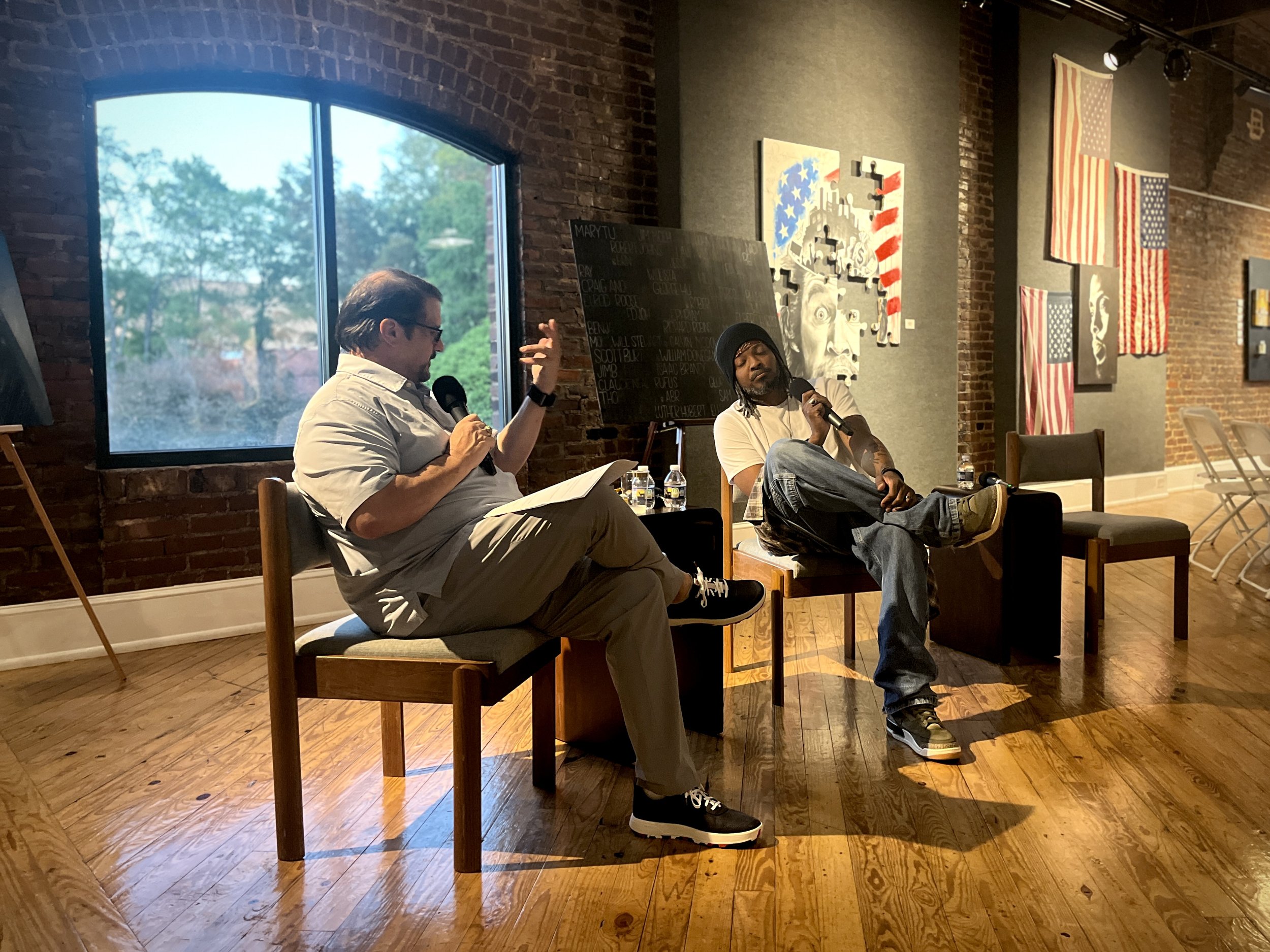
This past September, we gathered at the Anderson Arts Center for our final Breaking Bread event of 2026.
And I keep thinking about that evening.
Through the Anderson Area Remembrance & Reconciliation Initiative (AAR&RI), we spent this year exploring three ideas: love, justice, and art. Three conversations connected by our commitment to remembering our history, understanding one another, and building the Beloved Community.
Our final gathering featured Anderson artist Nat Morris and Amerikan Dream, an exhibition created with fellow artist Shea Abramo.
I arrived with seven questions prepared for Nat.
But as I walked through the gallery, something became apparent. Nat's most powerful language wasn't necessarily his spoken words. It was his artwork.
His stories were already on the canvas.
The colors. The images. The textures. The memories. The difficult histories.
As someone who has spent much of my professional life interviewing people, I found myself wondering whether asking Nat to explain every piece might actually limit what others could experience.
So we changed the conversation.
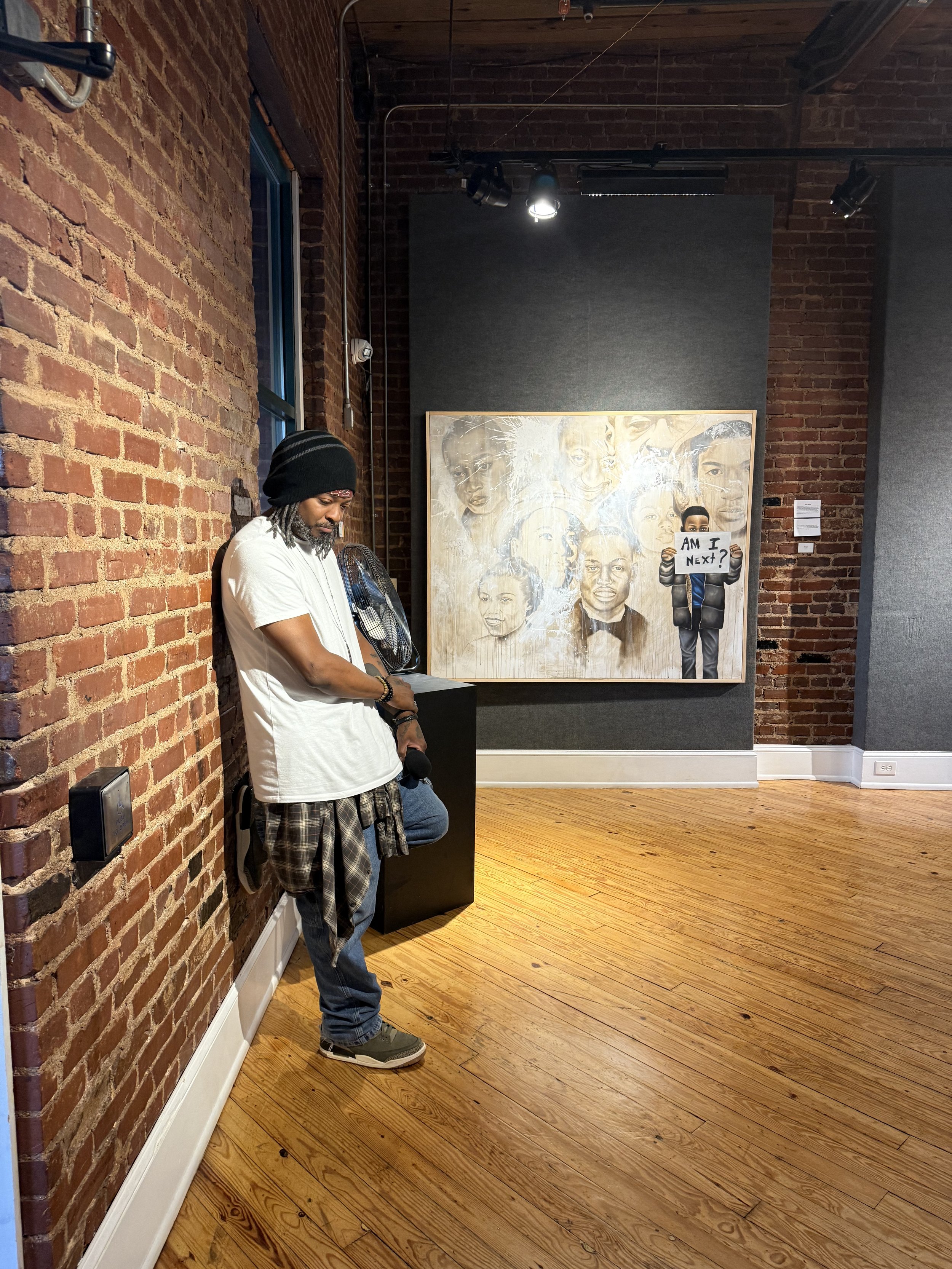
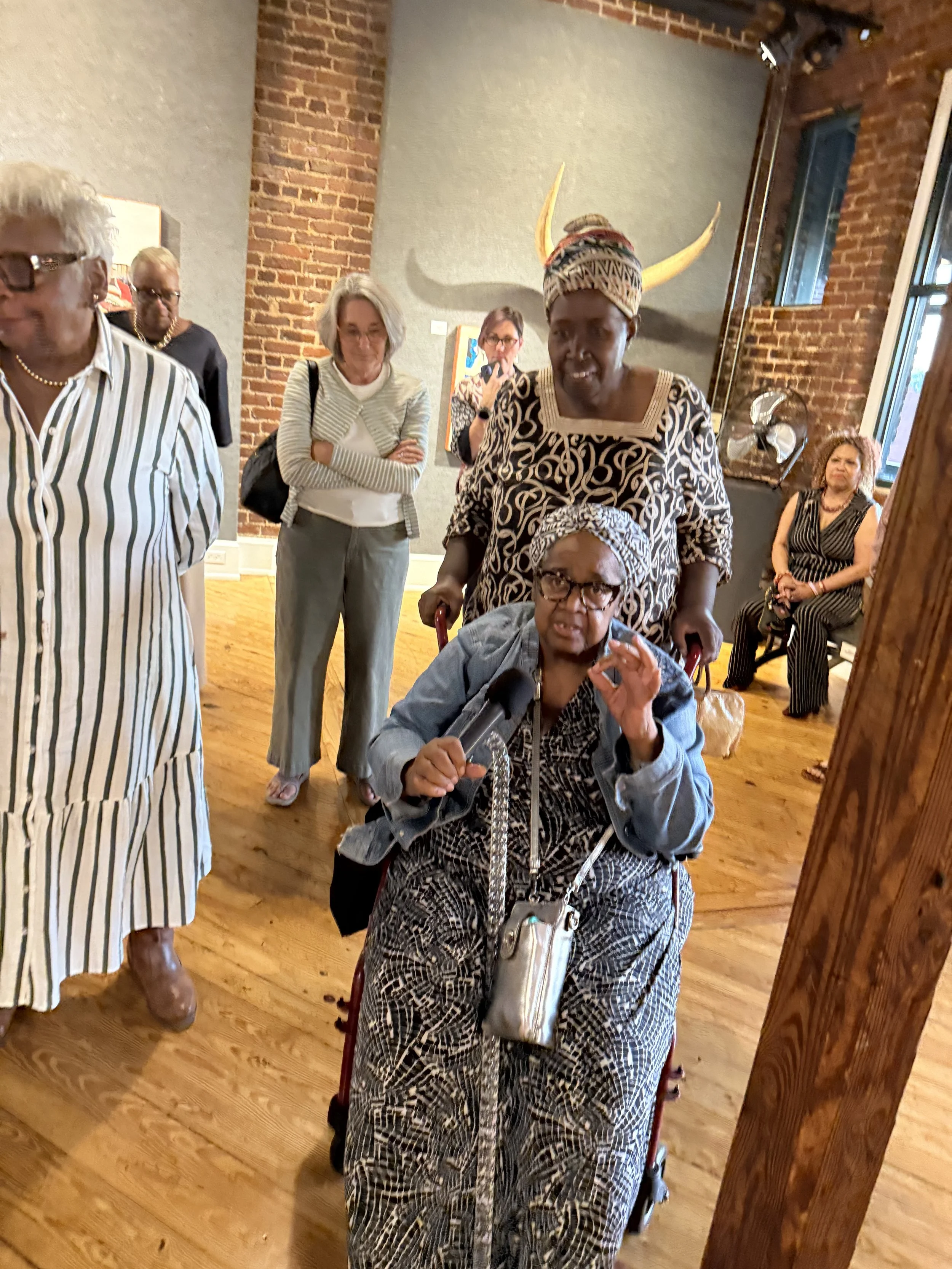
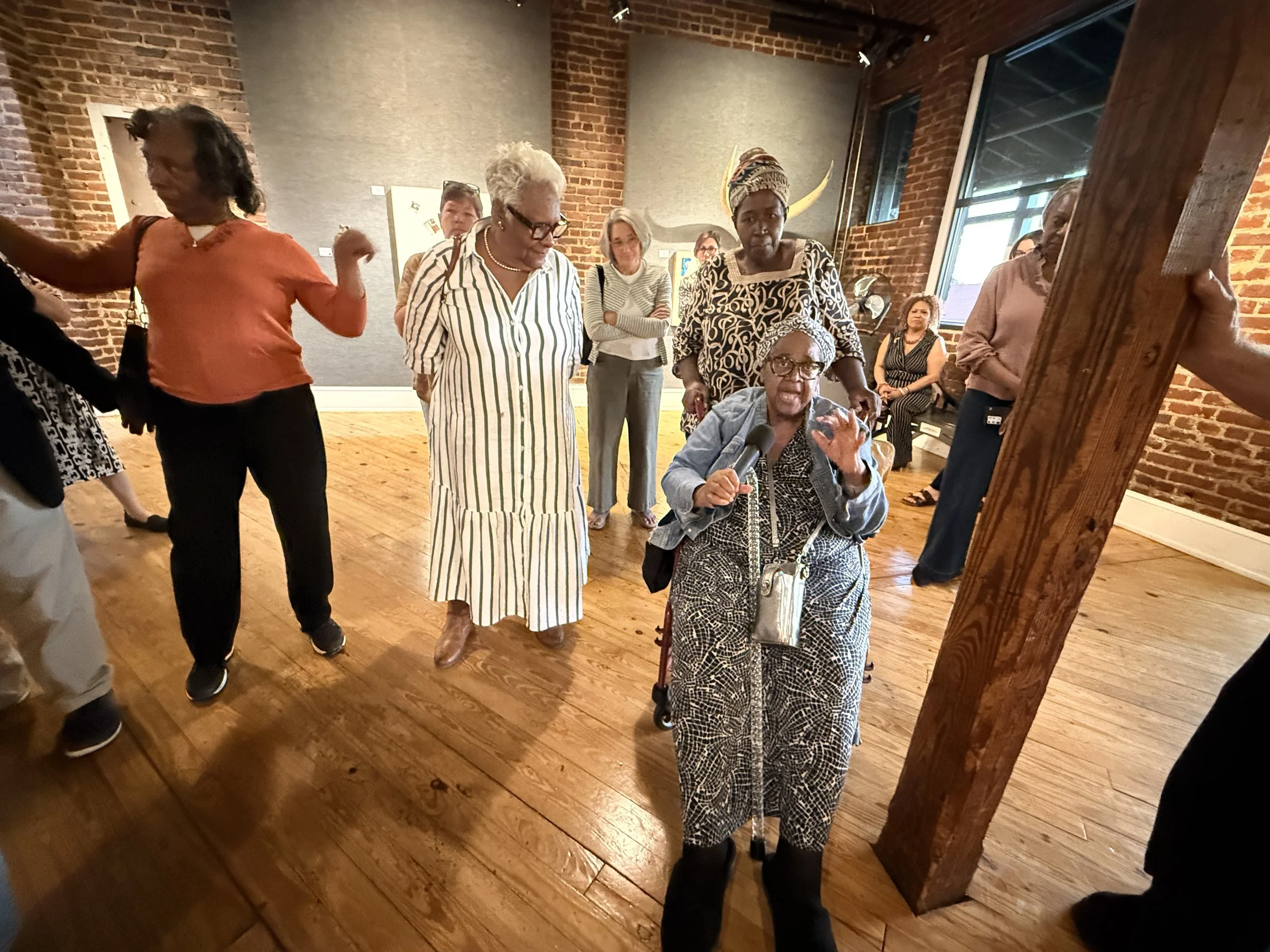
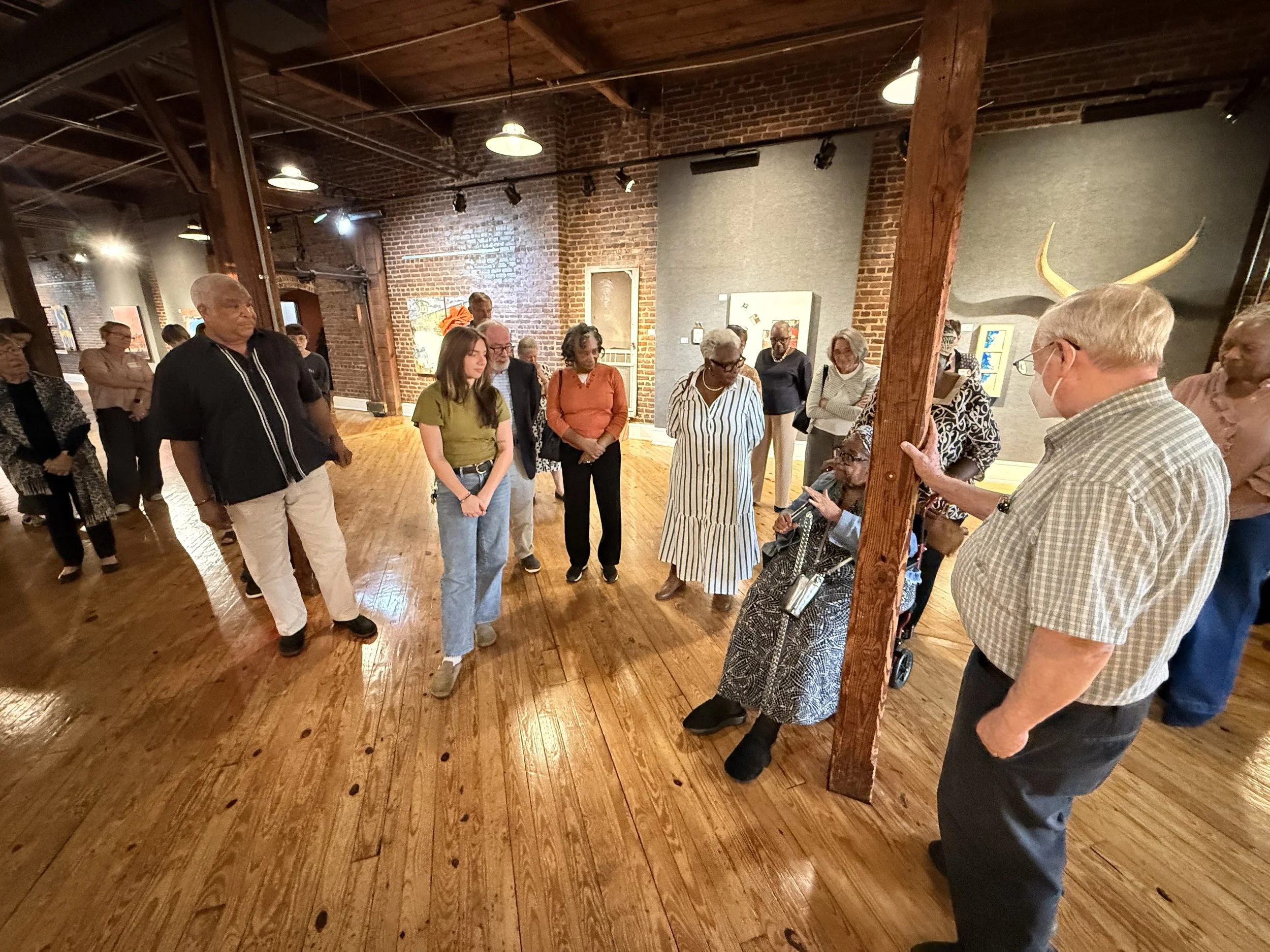
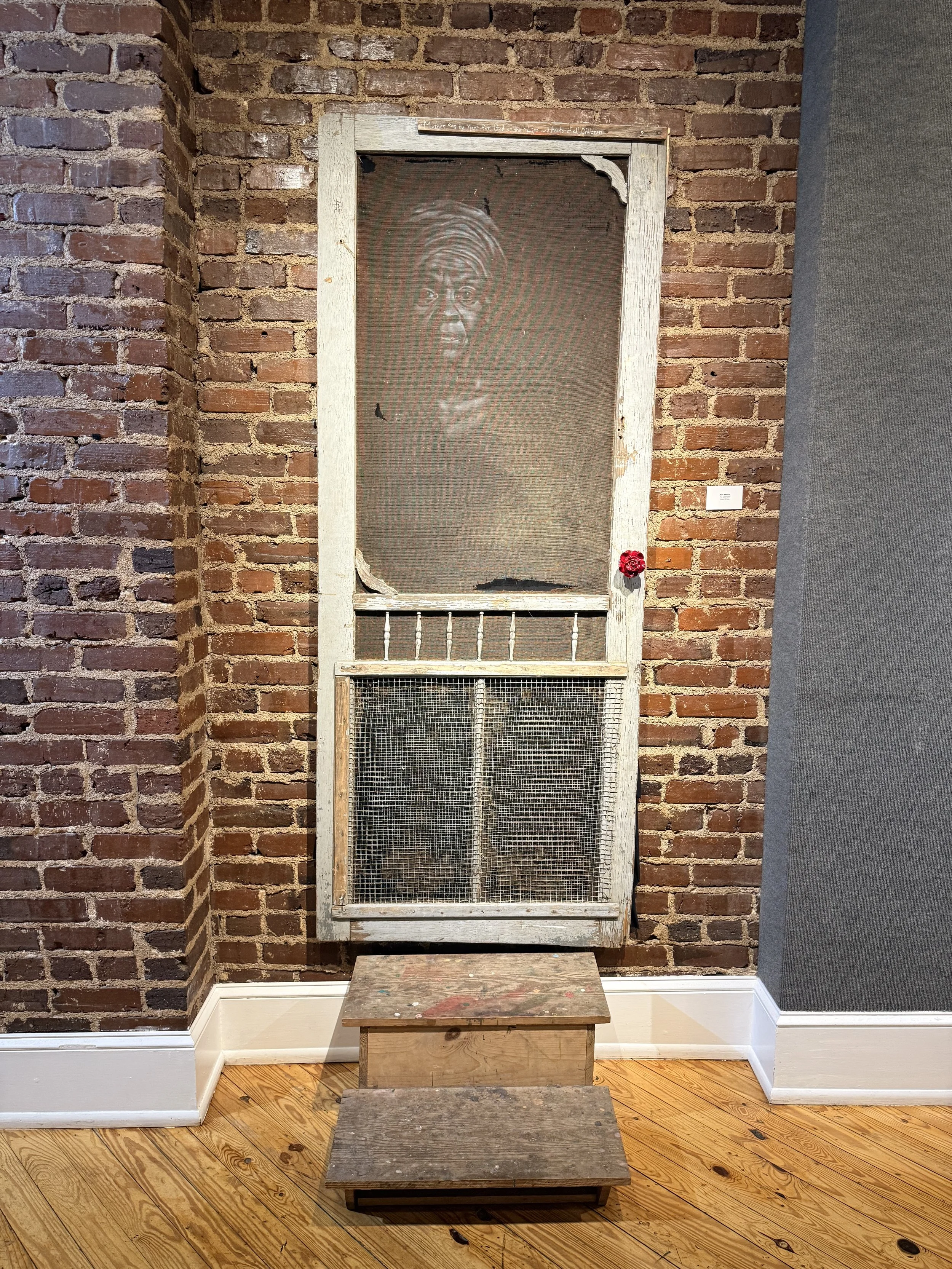
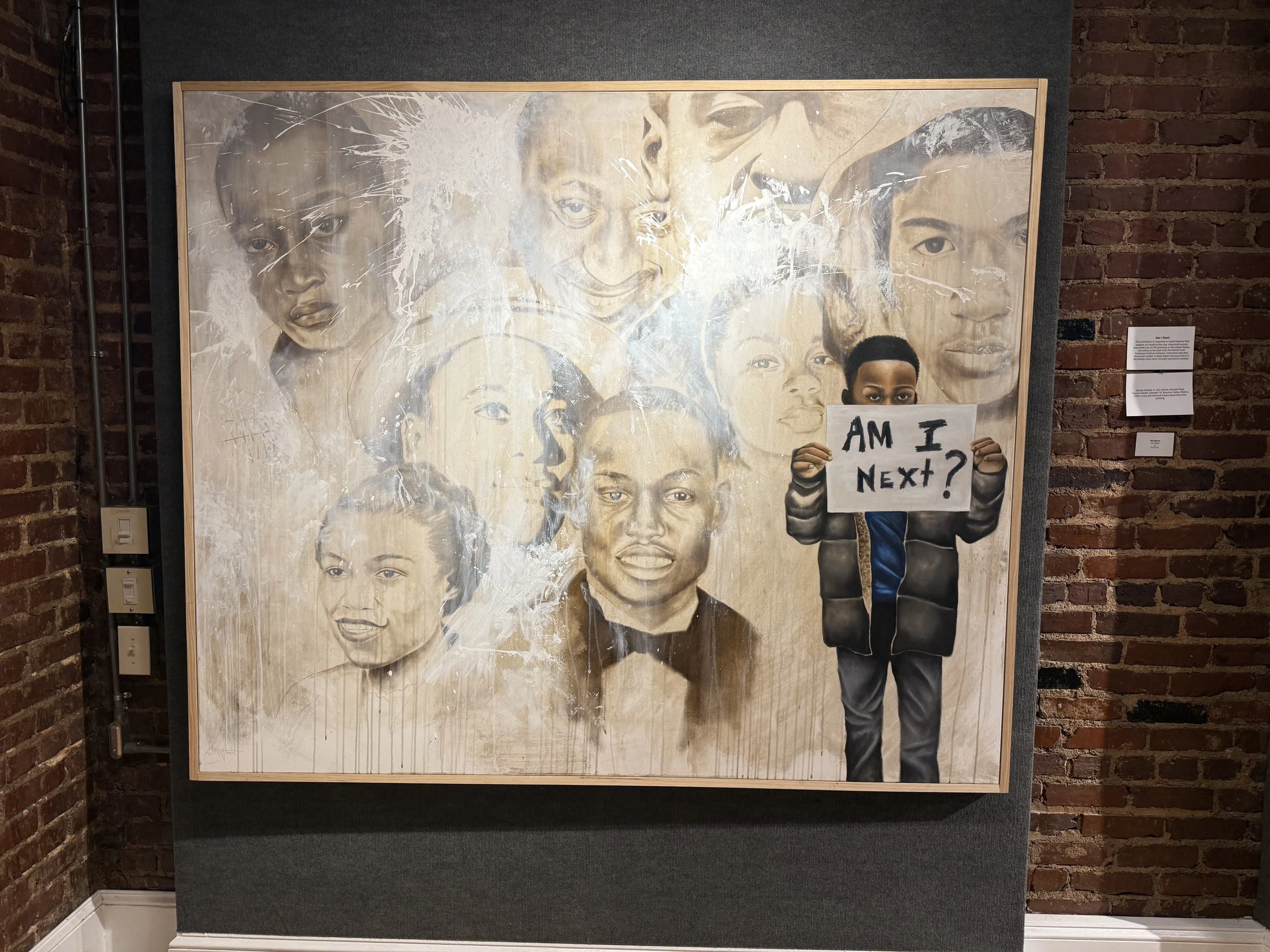
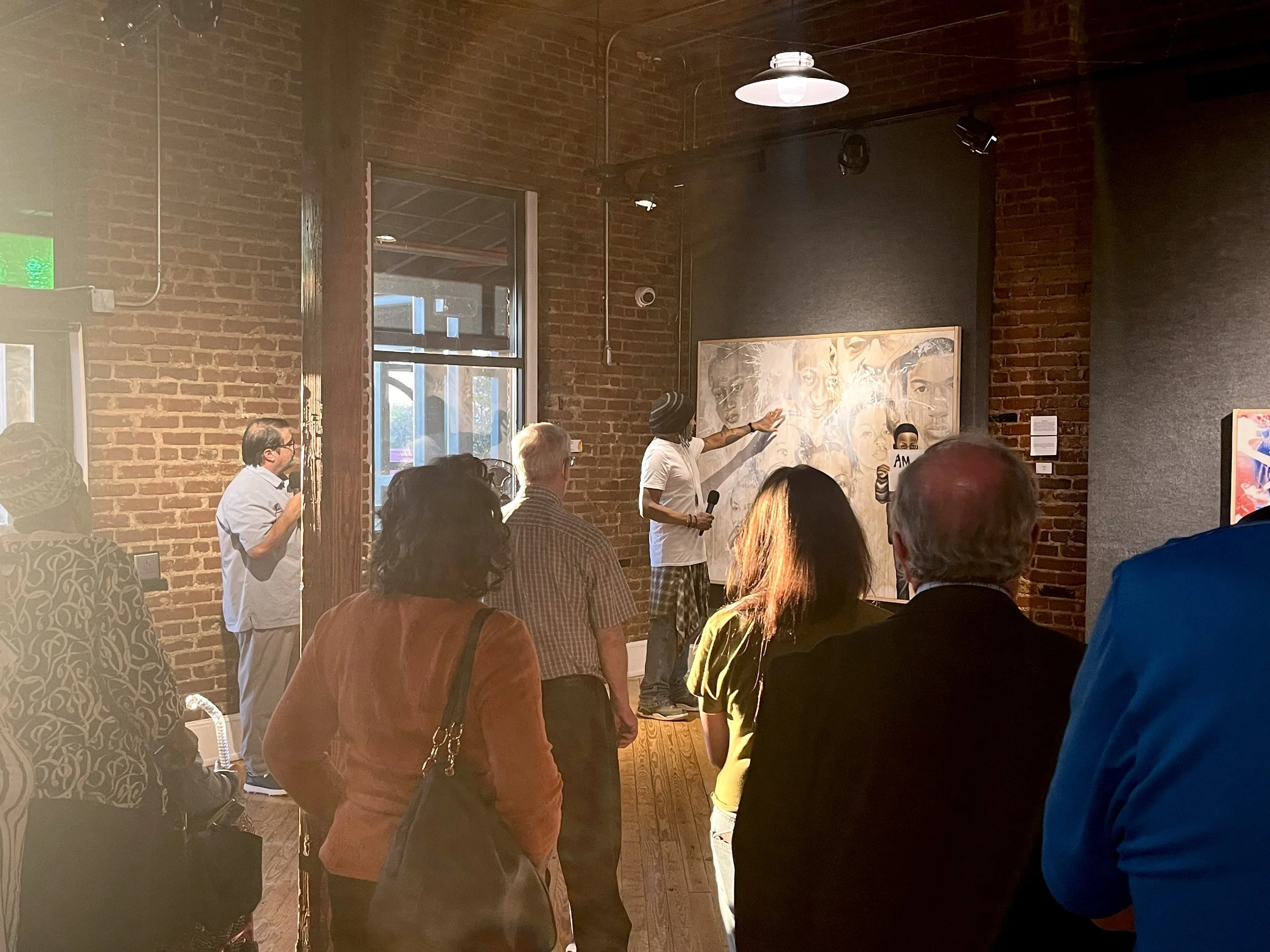
We got up from our chairs and gathered around two pieces of artwork, The Door and Am I Next?
And we began asking one another a simple question.
What do you see?
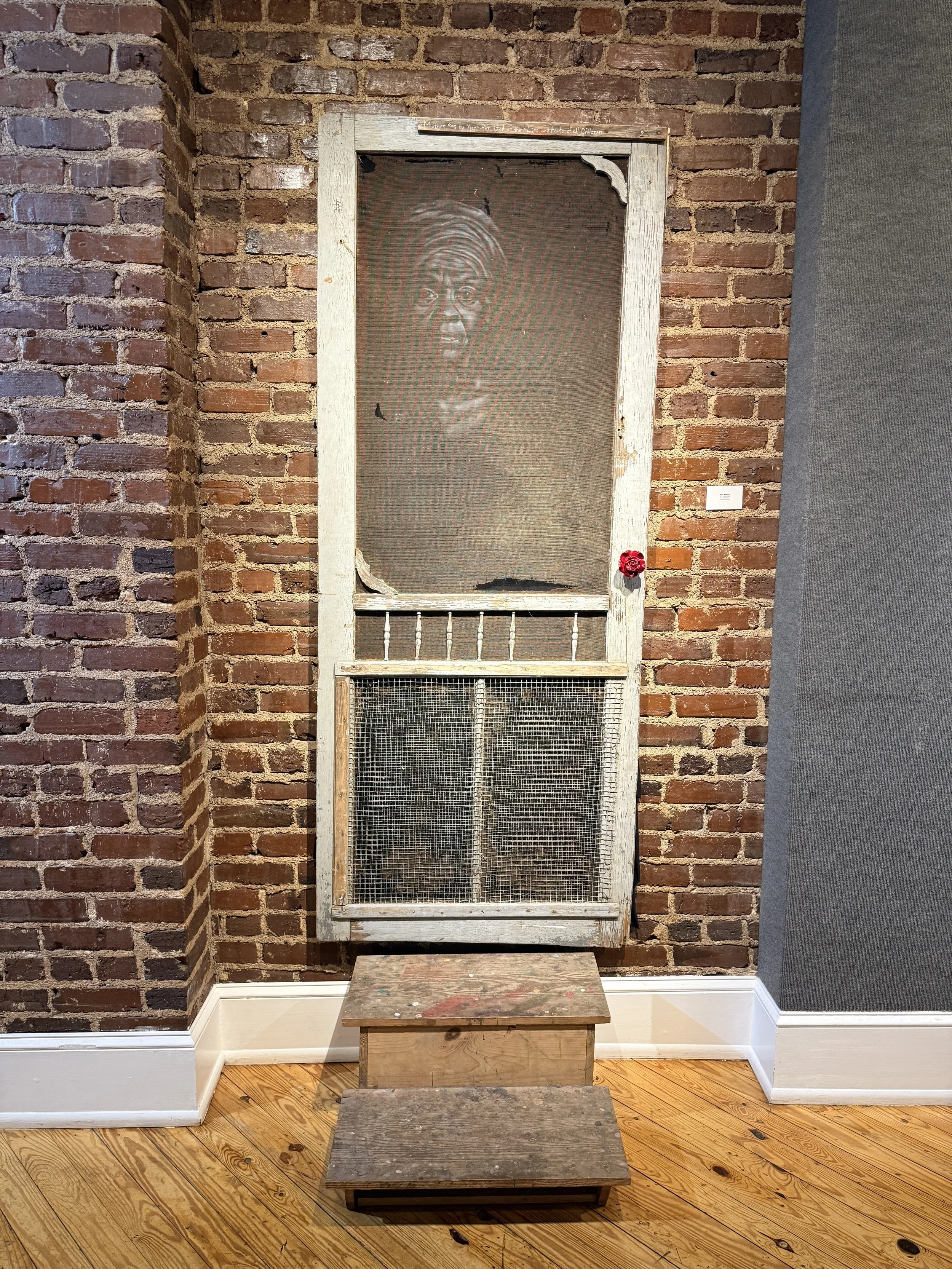
Around The Door, people shared memories of grandmothers, childhood, family, and protection. One piece of artwork opened a doorway into so many different lives.
But standing before Am I Next?, the conversation became something else.
Black participants began sharing deeply personal experiences about racial violence, their children, fear, resilience, and the responsibility to remember those whose lives have been taken.
I stood there listening.
And then a Black woman asked if we could hear what some of the white participants were seeing in the same artwork.
We paused.
We waited.
And that moment has stayed with me.
For the first time in our Breaking Bread gatherings, I was recognizing a different dynamic in the room. Black participants were not simply responding to a conversation about racial history. Their voices and experiences were helping lead it.
And now someone was inviting others into that conversation.
I didn't ask that question as the moderator.
Someone in the room did.
Sometimes the most important question doesn't come from the person holding the microphone. It comes from someone who recognizes whose voice has not yet been heard.
As I reflect on that evening, I keep thinking about why we gather in the first place.
We can host events. We can invite speakers. We can create opportunities to learn about our history.
But remembrance cannot become something we do for one evening and then move on.
And reconciliation cannot simply be something we discuss.
We have to keep showing up.
We have to keep breaking bread together.
We have to be willing to share experiences with people who may not see the world the same way we do. To hear stories that challenge our understanding. To sit with uncomfortable truths without feeling the need to resolve everything before leaving the room.
I think about Kenneth Burke's concept of terministic screens, the idea that our language and experiences shape what we notice and how we understand the world.
That evening, we stood before the same artwork, yet each person saw something different.
The beauty wasn't that we all arrived at the same interpretation.
It was that we were willing to listen to one another.
And perhaps that's what I want to remember most.
Nat Morris gave us the art.
The people in the room gave it words.
And together, we experienced something that cannot be confined to one evening.
The Beloved Community isn't built through a single event, a single conversation, or a single shared experience.
It is built through our continued willingness to gather, remember, listen, and make room for one another.
I am still thinking about what happened in that gallery.
And I hope we keep finding reasons to break bread together.
Because the conversation cannot end when we leave the room.