
The Marker
A Witness to History.
A Commitment to Truth.
A Call to Remember.
Standing in the heart of Anderson County, this historical marker honors five lives taken by racial terror, acknowledges the truths of our past, and invites our community to continue the journey toward reconciliation and Beloved Community.
Overview
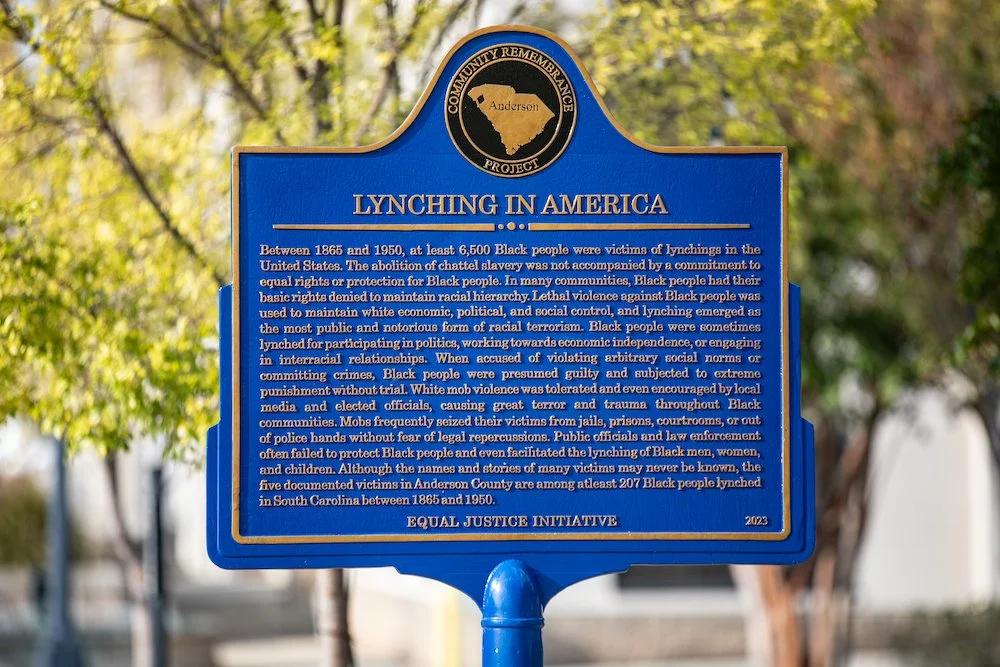
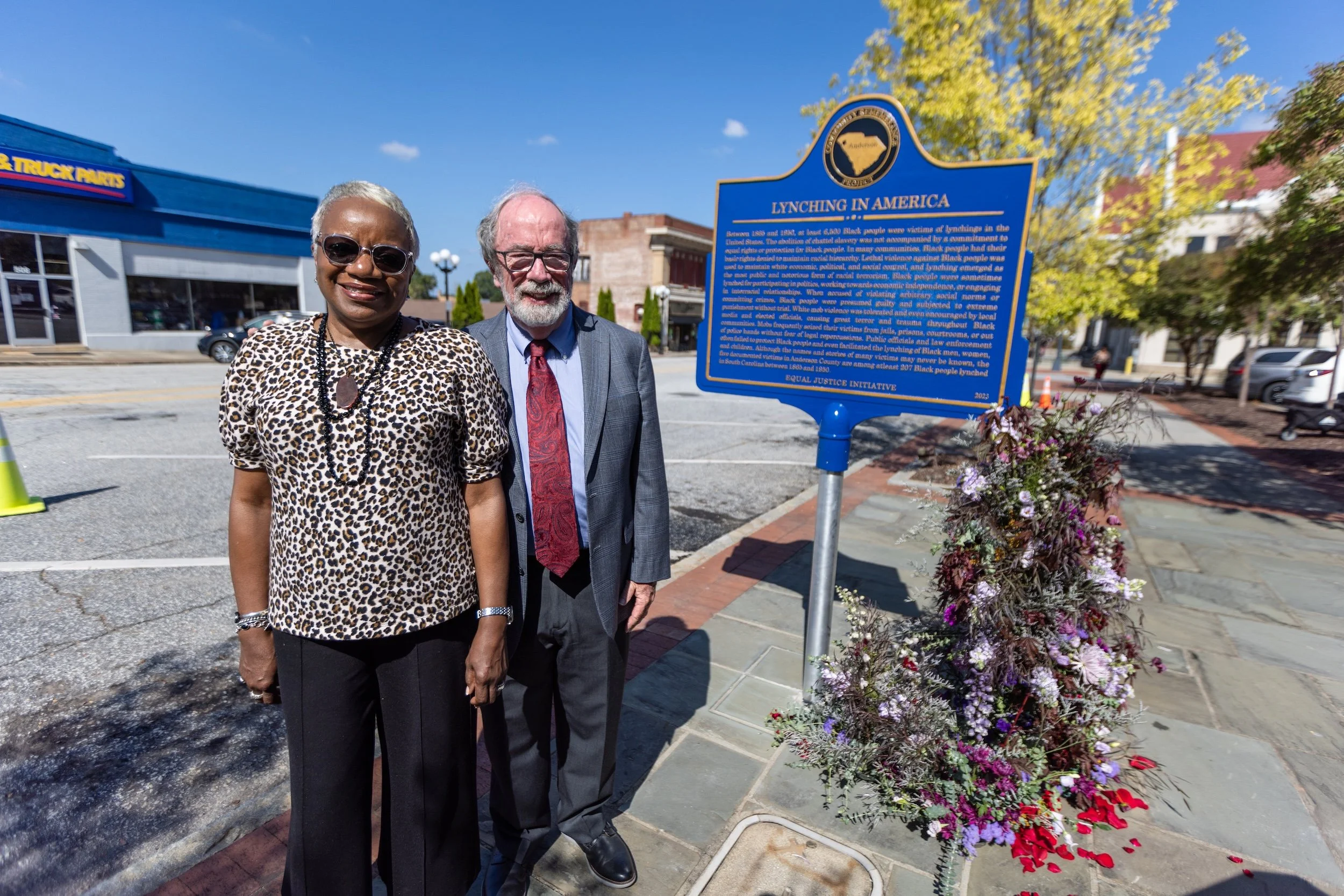
Created in partnership with the Equal Justice Initiative’s Community Remembrance Project, this historical marker stands in downtown Anderson as a permanent public acknowledgment of the five documented victims of racial terror lynching in Anderson County.
The blue and gold marker serves as a visible reminder in the heart of our community, accessible to the public day and night. It creates a place where residents and visitors can pause, reflect, and engage with a history that was too often forgotten or left untold.
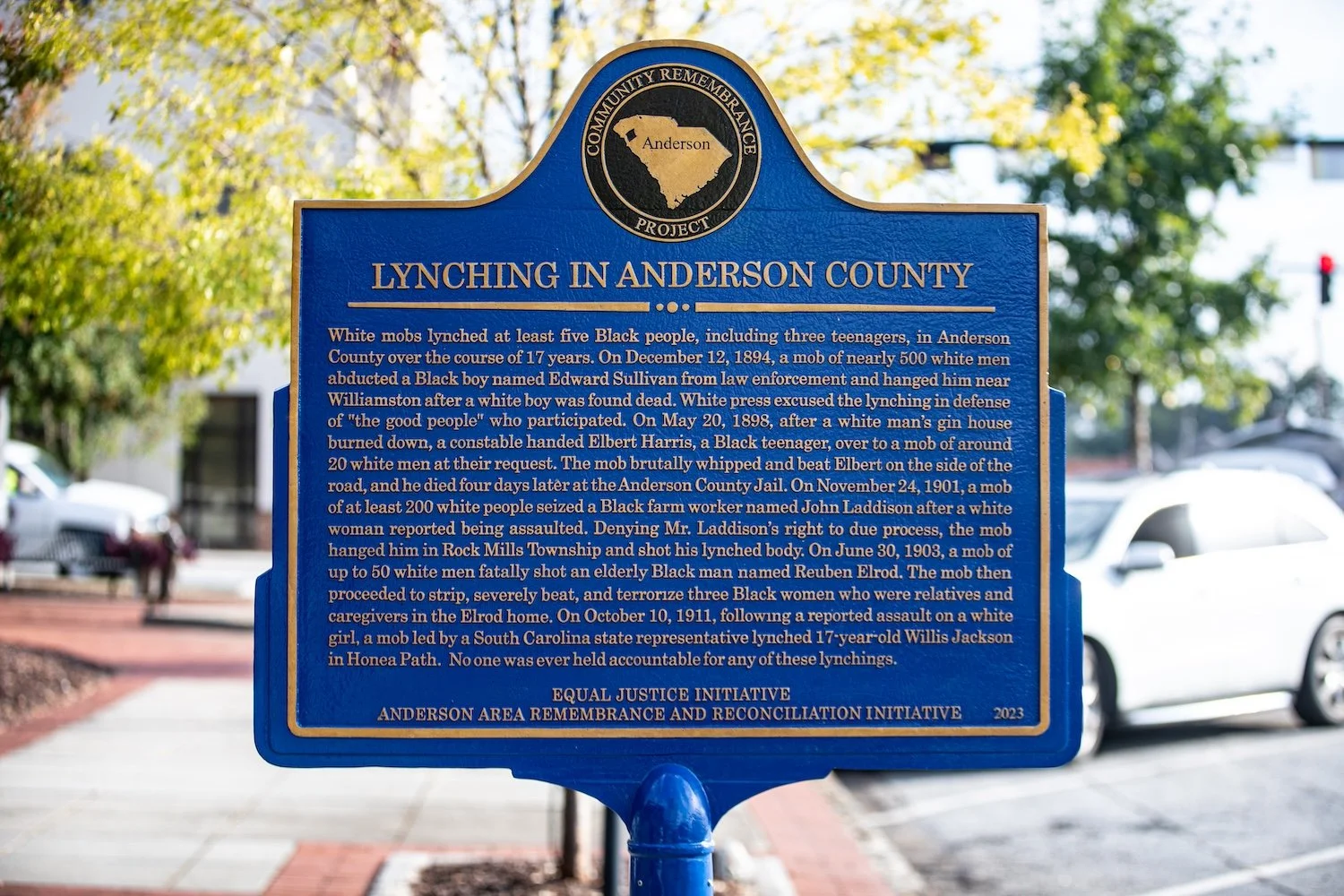
The marker tells two connected stories. One side shares the broader history of racial terror lynching in America, connecting Anderson County to a national movement of remembrance and truth-telling. The other side focuses on our local history, honoring the lives of Ed Sullivan, Elbert Harris, John Laddison, Reuben Elrod, and Willis Jackson.
More than a marker, it is a commitment: to remember their names, acknowledge our past, and continue the journey toward reconciliation and the realization of Beloved Community.
The Journey to Remembrance
The creation of the historical marker represents years of research, partnership, and community commitment. Through collaboration with the Equal Justice Initiative, Anderson County joined a national movement to confront history honestly, honor lives taken by racial terror, and build a path toward reconciliation.
-
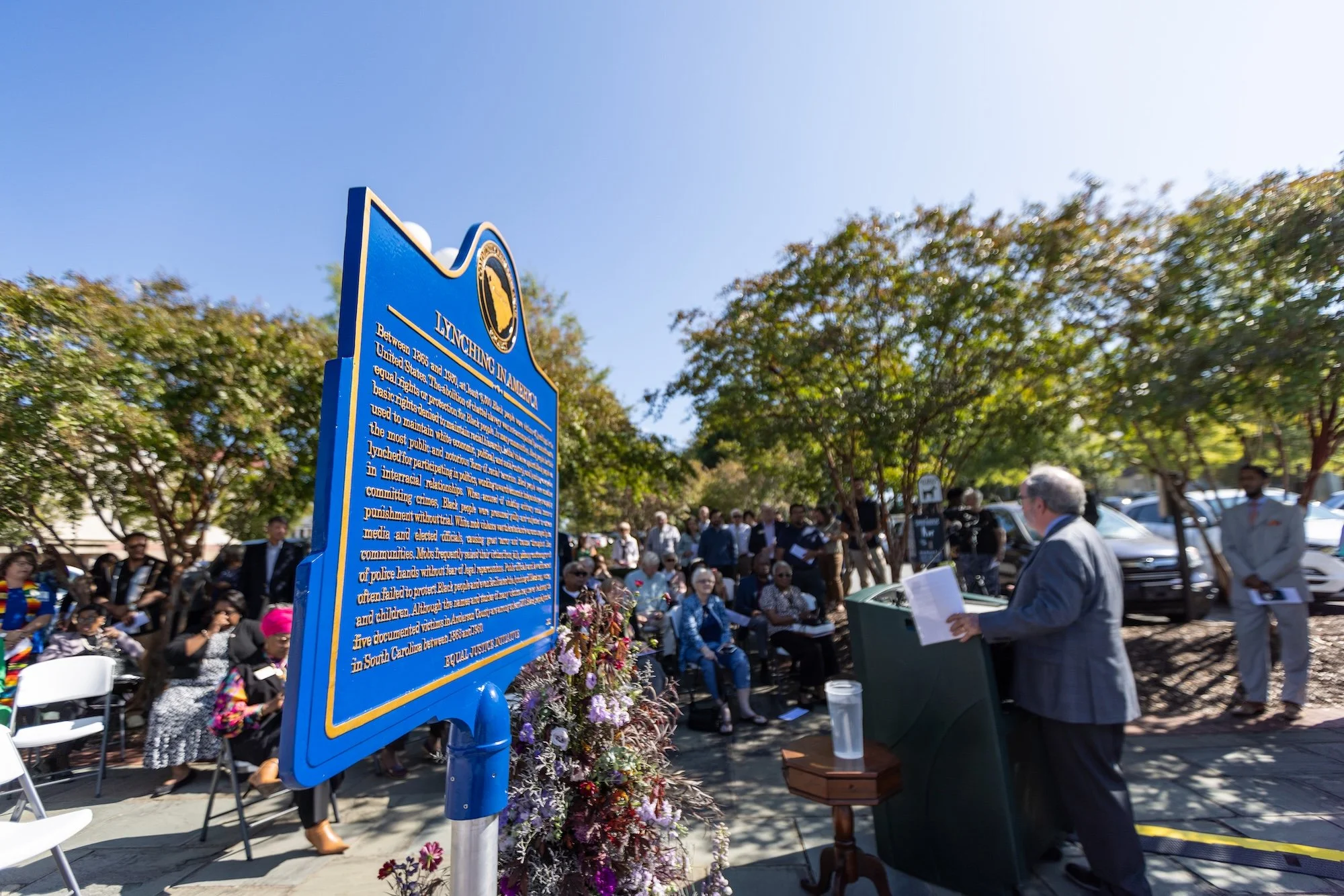
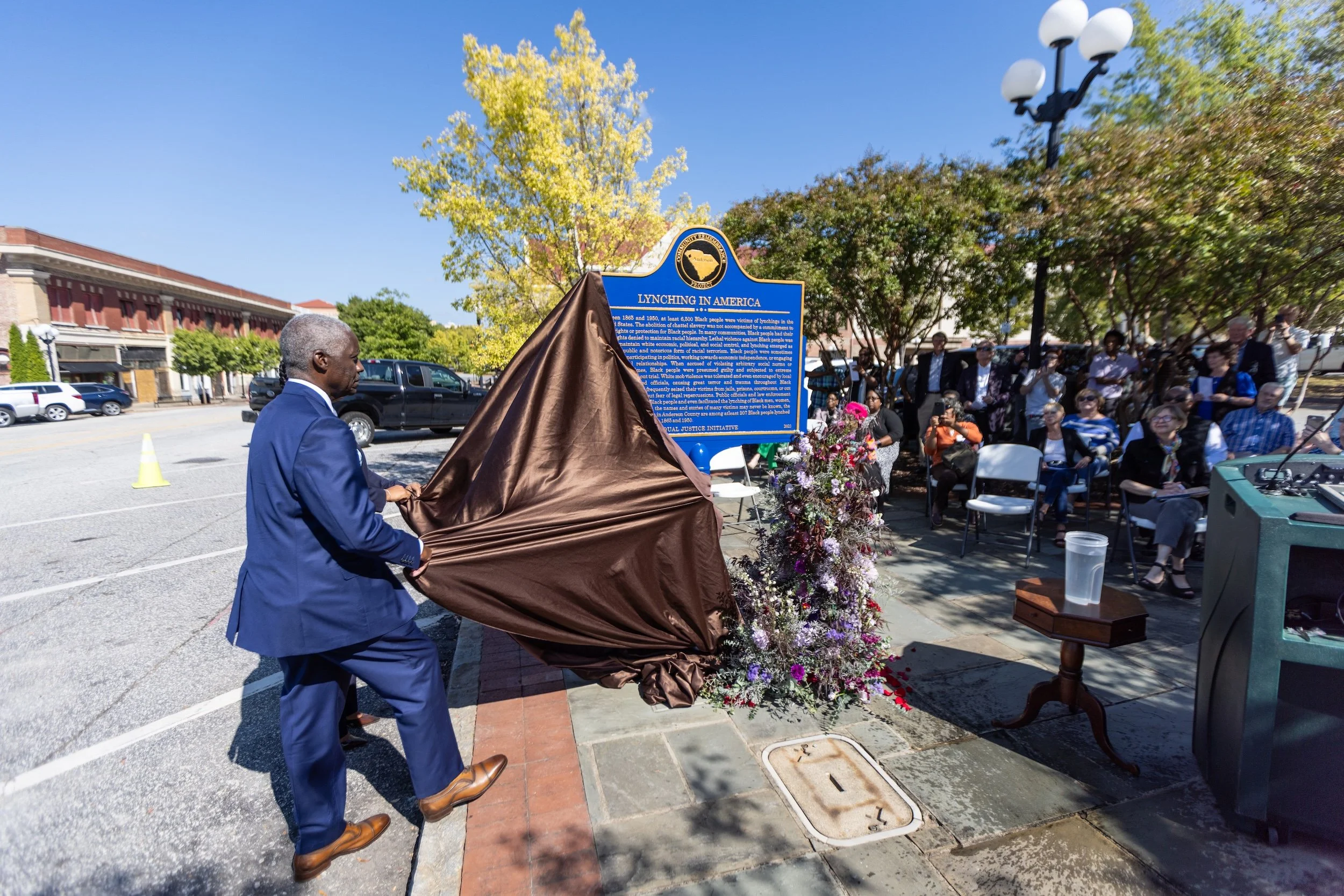
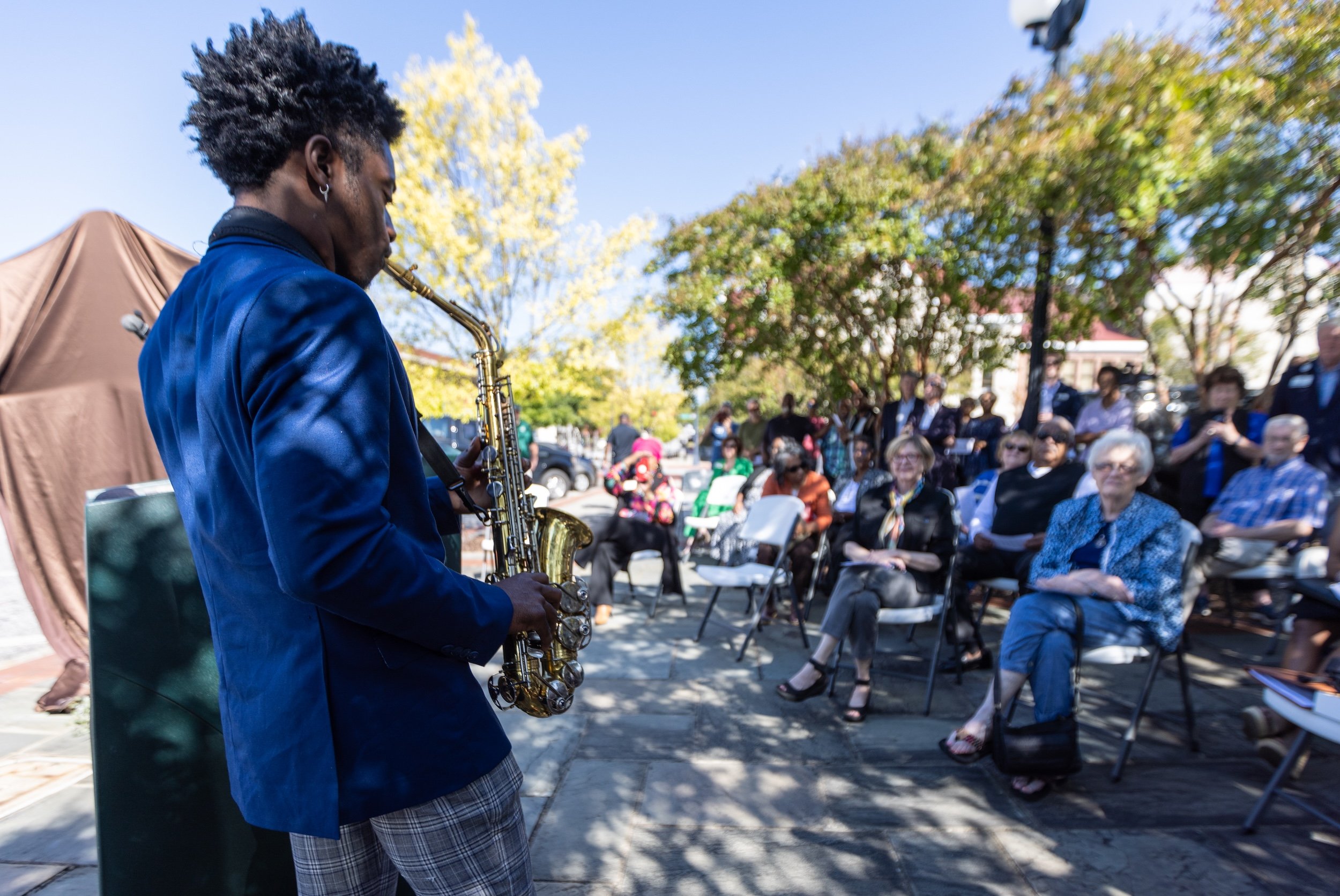
On October 3, 2023, community members gathered in downtown Anderson for the unveiling of a permanent historical marker honoring the five documented victims of racial terror lynching in Anderson County.
The marker stands as a public commitment to remembrance, truth-telling, and reconciliation by memorializing:
Ed Sullivan (1894)
Elbert Harris (1898)
John Laddison (1901)
Reuben Elrod (1903)
Willis Jackson (1911)During the ceremony, Terrence Roberts shared:
“Today, we are proud to unveil a permanent historical marker in honor of the five victims… I want to say thanks to all that have participated in this and who share the vision of truth and reconciliation as a portal to a brighter future.”
-
The Anderson Area Remembrance & Reconciliation Initiative partnered with the Equal Justice Initiative (EJI) in Montgomery, Alabama, to research, identify, and honor the five known victims of racial terror lynching in Anderson County between 1894 and 1911.
Beginning in 2021, through the vision and leadership of Dr. Stuart Sprague and a group of local volunteers, AAR&RI began working to create spaces for education, dialogue, and reflection.
The marker represents a commitment to acknowledge the past honestly while working toward a future where true fellowship and Beloved Community can flourish among all people.
-
Representatives from the Equal Justice Initiative joined the Anderson community for the marker unveiling, recognizing this local effort as part of a larger national movement of remembrance.
Deksyos Damtew of EJI shared:
“It is important that we come together with communities across the United States to erect markers like the one that we are here to witness today, to honor the lives of lynching victims.”
EJI has documented thousands of racial terror lynchings across the United States and works alongside communities to create public markers, memorials, and spaces for truth-telling.
Through this partnership, Anderson County joins communities across the nation committed to remembering history, honoring victims, and continuing the work toward justice and reconciliation.

Visit The Marker
The Marker
503 S Main Street
Anderson, SC 29624
Location
Between the Anderson Police Department and the City of Anderson Business Offices.
Marker Unveiling - Ceremony of Remembrance
Featured Story
In Plain Sight: Equal Justice Initiative Marker - Downtown Anderson, SC
In 2024, Anderson County installed its first Equal Justice Initiative historical marker memorializing five victims of racial terror lynching. But the marker itself is only part of the story.
This documentary follows the journey of the Anderson Area Remembrance and Reconciliation Initiative as community leaders, historians, faith leaders, and citizens worked together to acknowledge a painful chapter of local history that had long remained unspoken. Through interviews, archival materials, and footage from the memorial ceremony, the film explores the challenges, resistance, and hope involved in public remembrance.
At the center of the story is a larger question: What happens when a community chooses to remember?
Rather than seeking blame, the project seeks understanding, reconciliation, and the possibility of building a more honest and beloved community through truth-telling.
This documentary was created as part of Anderson University’s COM 451 Documentary Storytelling course during the Fall 2025 semester.
Team Members:
Holly Mikell: Director/Producer/editor
Emma Grace Sullivan: Videographer/editor
Eliana Castano: Producer/Director/editor
Executive Producer:
Bobby Rettew, MA / COM 451 Instructor
Assistant Professor
Anderson University
Department of Communication
-

REMEMBRANCE
Whose stories must remain visible?
Honoring Edward Sullivan, Elbert Harris, John Laddison, Reuben Elrod, and Willis Jackson through a permanent public marker preserving their names and stories. -

RECONCILIATION
How does truth transform a community?
Creating a public space in downtown Anderson where history can be acknowledged, conversations can begin, and understanding can grow. -

BELOVED COMMUNITY
What legacy will we create together?
Inviting our community to carry remembrance beyond the marker and continue the work toward justice, healing, and shared belonging.
"The end is reconciliation; the end is redemption; the end is the creation of the Beloved Community."
— Dr. Martin Luther King, Jr.