
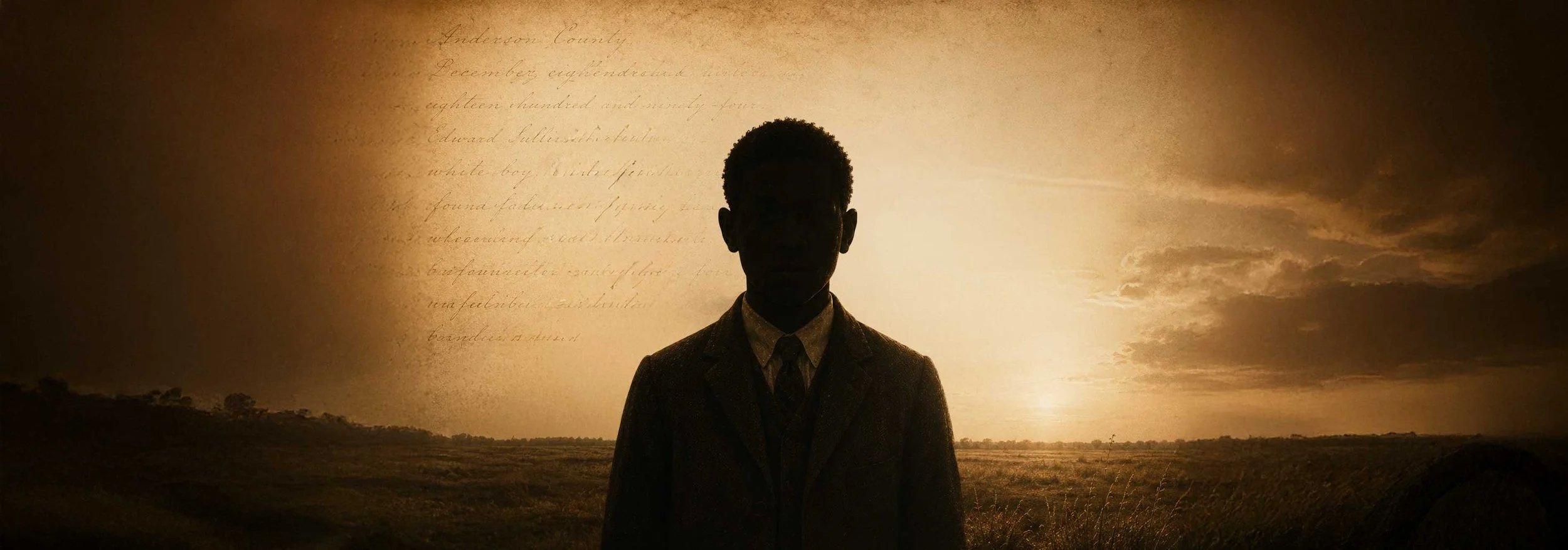
JOHN LADDISON
Rock Mills Township, SC
—
November 24, 1901
Age 17-18
TIMELINE
-
Late 1800s
John Laddison is convicted in Newberry County and enters South Carolina's convict leasing system.
-
After completing his sentence
He continues working on plantations in Anderson County.
-
November 23, 1901
A white woman is shot near Rock Mills Township.
-
November 23–24, 1901
Hundreds of white residents and law enforcement search for a suspect.
-
November 24, 1901 (midday)
John Laddison is seized from the plantation where he is working.
-
November 24, 1901
He is identified by the wounded woman, reportedly confesses under mob control, and is lynched without trial.
-
November 25, 1901
A coroner's jury concludes he died at the hands of "parties unknown."
-
We Must Remember
No participant in the lynching is ever arrested or prosecuted.
The Story
-
Very little is known about John Laddison's early life.
Historical records identify him as a Black farm worker living in Anderson County at the time of his death in 1901. They also reveal that, before arriving in Anderson County, John had been caught in the system of convict leasing—a practice that emerged after the Civil War and forced thousands of African Americans into labor under brutal conditions through criminal convictions and leased prison labor.
Even after completing his sentence, John continued working on plantations in Anderson County, reflecting the limited opportunities available to many formerly incarcerated Black laborers in the South at the turn of the twentieth century.
Much of John's personal story has been lost. We do not know where he was born, whether he had a wife or children, or what hopes he carried for the future. What remains is the record of a man whose humanity was too often reduced to labor and accusation.
Today we remember John Laddison not as a stereotype created by newspaper headlines, but as a man whose life possessed inherent dignity and whose constitutional rights were denied by mob violence.
-
On November 23, 1901, a white woman living on a plantation in Rock Mills Township was shot and wounded after an encounter with a Black man who had reportedly come to the home asking for food. News of the shooting spread rapidly throughout Anderson County.
Within hours, hundreds of armed white residents joined law enforcement officers in searching for the alleged assailant. Bloodhounds were used, plantations were searched, and the hunt continued throughout the night.
By the following afternoon, no suspect had been identified.
Eventually, members of the search party arrived at another nearby plantation where John Laddison was living and working. The mob surrounded his home and forced him outside. They carried him back to the plantation where the shooting had occurred, and after the wounded woman identified him as her attacker, newspapers reported that John confessed.
Confessions obtained under these circumstances were common during the era of racial terror. Faced with armed mobs and the immediate threat of death, Black men often confessed under fear, intimidation, or physical abuse. Such statements rarely received independent scrutiny before mobs claimed them as proof of guilt.
Rather than allowing the criminal justice system to investigate the allegations or conduct a trial, the mob decided that John should die.
They carried him about a mile away to a tree near a ginhouse, hanged him, and fired bullets into his body. Before leaving, members of the mob pinned a note to his clothing declaring that he had been hanged for shooting a white woman.
His body remained where it fell until the following morning.
No participant in the lynching was ever prosecuted.
-
John Laddison's death tells two stories.
The first is the story of racial terror. Hundreds of people participated in or witnessed his lynching. Newspapers praised the mob's actions and described the killing as orderly while expressing little concern for John's life or his constitutional rights. Although the coroner concluded that John died at the hands of "parties unknown," newspapers openly acknowledged that many respected white citizens had taken part. No meaningful investigation followed.
The second story began years before November 1901.
John had previously been caught in the convict leasing system, one of the most significant yet least understood forms of racial oppression after the Civil War. Under this system, Black men convicted—often for minor offenses—were leased by governments to private employers, where they worked under dangerous and frequently inhumane conditions. Although slavery had been abolished, the exception clause of the Thirteenth Amendment permitted involuntary labor as punishment for crime, creating a system that many historians recognize as a continuation of slavery under another name.
John survived that system only to lose his life to another.
His story reminds us that racial terror lynching did not exist in isolation. It was part of a broader system that controlled Black labor, denied equal protection under the law, and reinforced white supremacy throughout the South.
-
John Laddison's story reminds us that justice is more than punishment for wrongdoing. Justice requires fair investigation, due process, and the equal protection of every person's constitutional rights.
His life also reveals how racial terror worked alongside systems such as convict leasing to deny African Americans both freedom and dignity long after the Civil War had ended.
The Anderson Area Remembrance & Reconciliation Initiative remembers John Laddison because truth requires us to acknowledge not only how he died, but also the systems that shaped his life. By remembering him honestly, we affirm the humanity that racial terror sought to erase and recommit ourselves to building a community where justice belongs equally to everyone.
-
John Laddison's story cannot be fully understood without understanding the system of convict leasing.
When the Civil War ended in 1865, the Thirteenth Amendment abolished slavery—but with one important exception. The amendment prohibited slavery and involuntary servitude "except as a punishment for crime."
Across the South, many states quickly used that exception to create a new system of forced labor. African American men and women were arrested—often for minor offenses, vague laws, or crimes that were selectively enforced against Black communities—and then leased by state and local governments to private businesses, plantations, railroads, mines, and industries.
Known as convict leasing, this system generated revenue for governments while providing employers with inexpensive labor. Unlike slavery, where enslavers had a financial incentive to preserve the lives of people they considered property, leased prisoners were often viewed as disposable. They endured dangerous working conditions, physical abuse, inadequate food, poor medical care, and extraordinarily high death rates.
Historians often describe convict leasing as one of the clearest examples of how slavery evolved rather than disappeared. It became part of a broader system that included Black Codes, disenfranchisement, segregation, debt peonage, and racial terror—all working together to maintain white supremacy and economic control after emancipation.
John Laddison experienced this system firsthand.
Historical records indicate that before arriving in Anderson County, John had been convicted in Newberry County and leased to work on a plantation. After completing his sentence, he continued working on farms in Anderson County, illustrating how difficult it was for many formerly incarcerated Black laborers to escape the plantation economy and build independent lives.
When accusations were later made against him in November 1901, the legal protections promised by the Constitution failed him once again. Rather than allowing an investigation or trial, a white mob seized John, decided his fate, and lynched him without due process.
His story reminds us that racial terror lynching was not an isolated act of violence. It existed alongside legal, political, and economic systems that systematically denied African Americans equal protection under the law.
Remembering John Laddison means remembering not only how he died, but also the system that shaped his life. By learning about convict leasing, we gain a fuller understanding of the long struggle for freedom and justice that continued long after slavery officially ended.
Artifacts
-
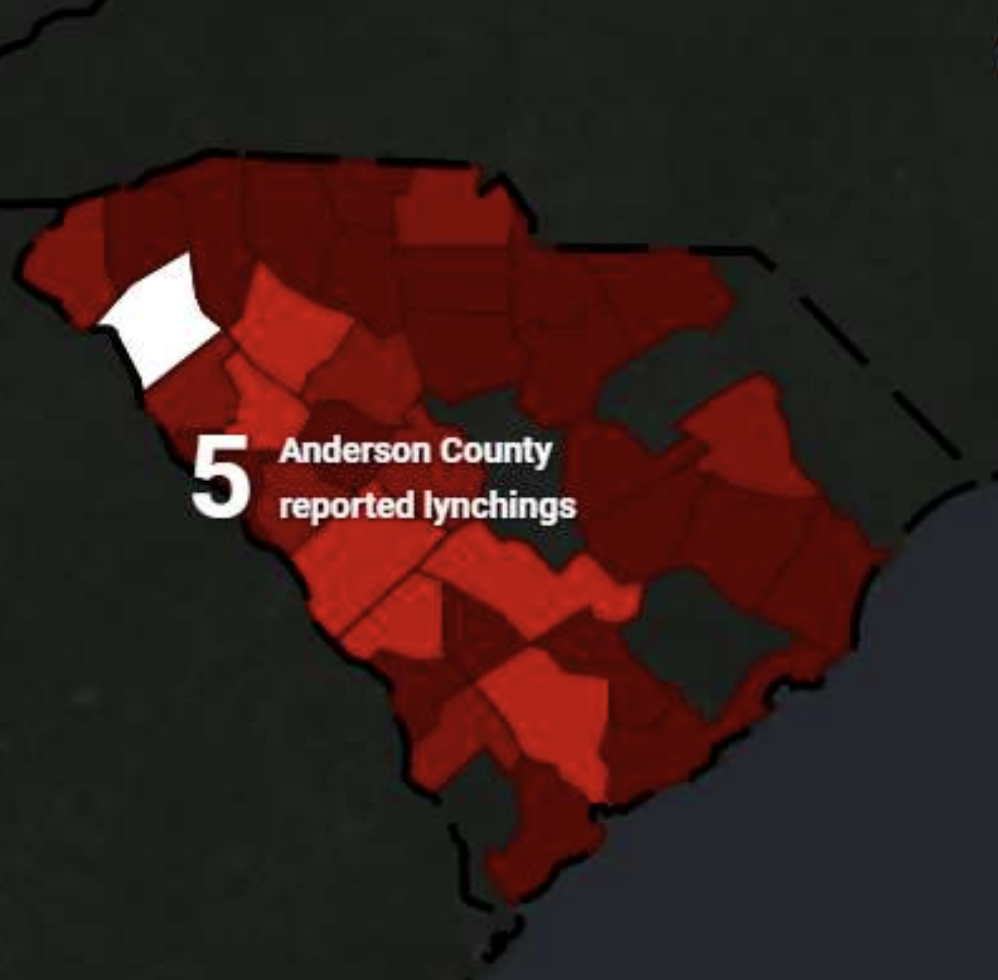
EJI Document
-
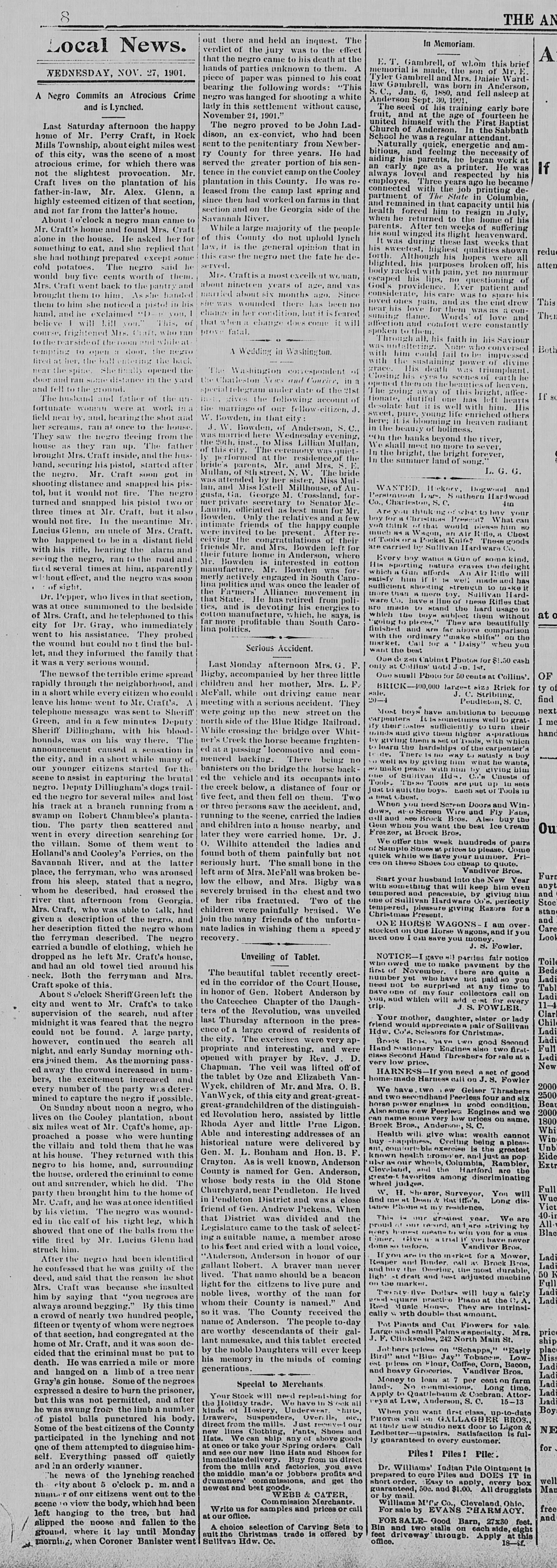
Anderson Intelligencer - November 27, 1901
-
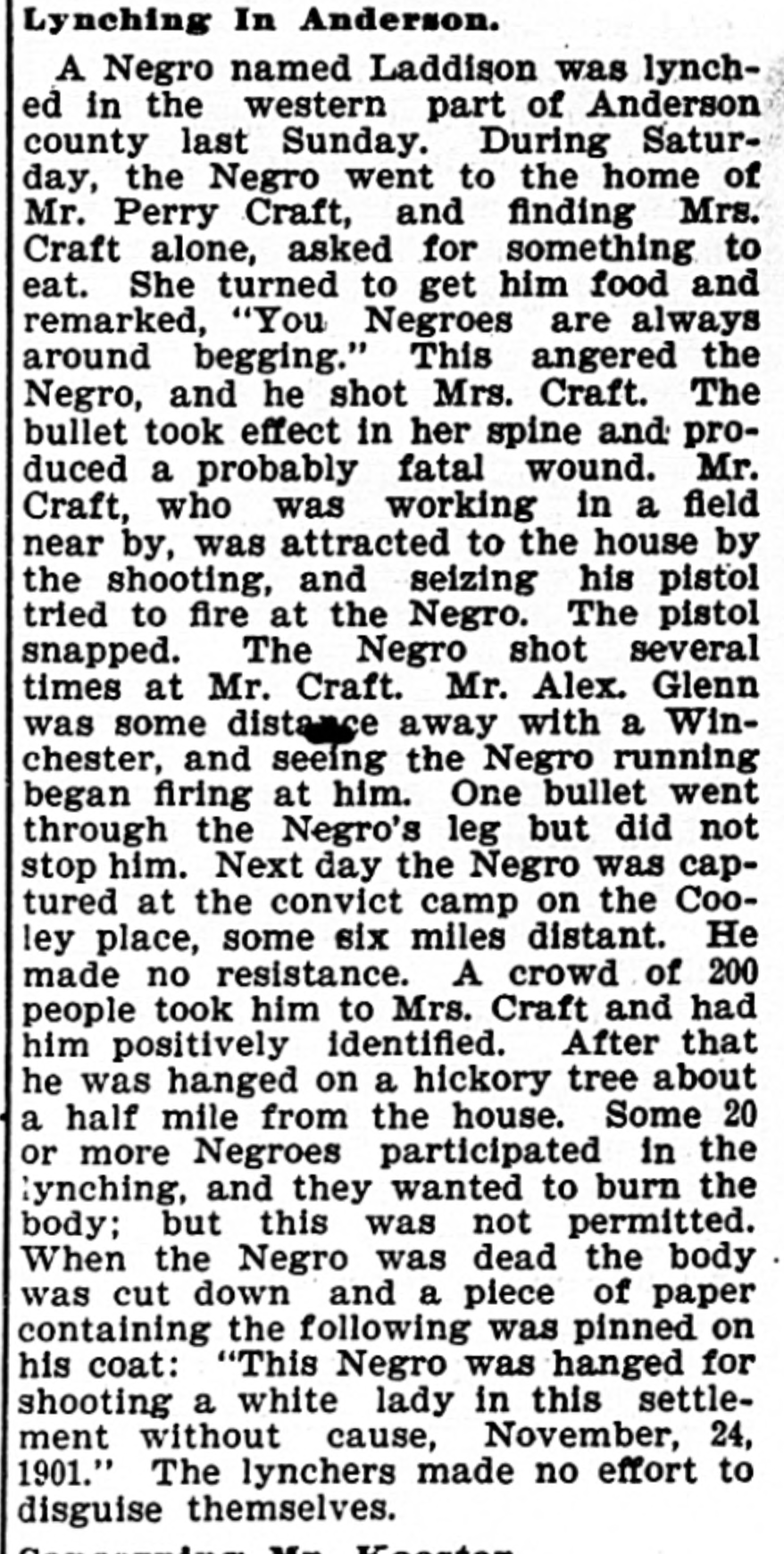
Yorkville Enquirer (Yorkville, SC) - November 27, 1901
-
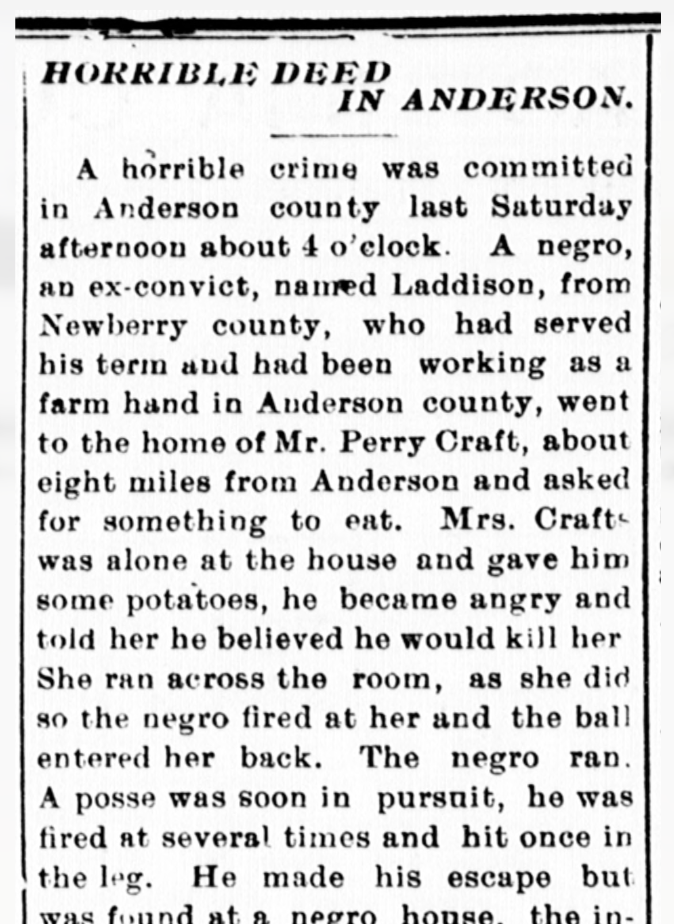
Union Times (Union, SC) November 29, 1901
-
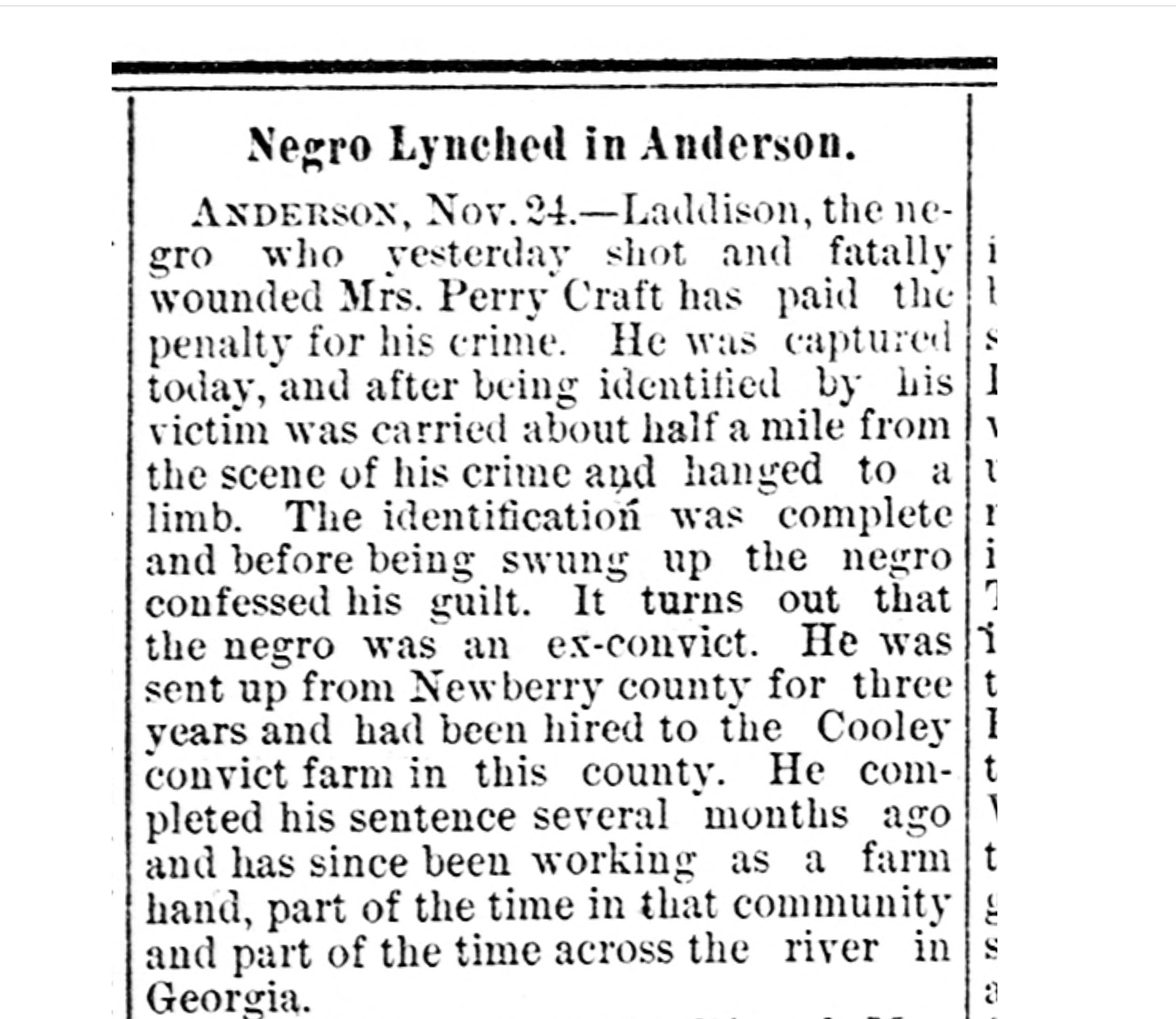
Bamberg Herald (Bamberg, SC) - November 28, 1901
-
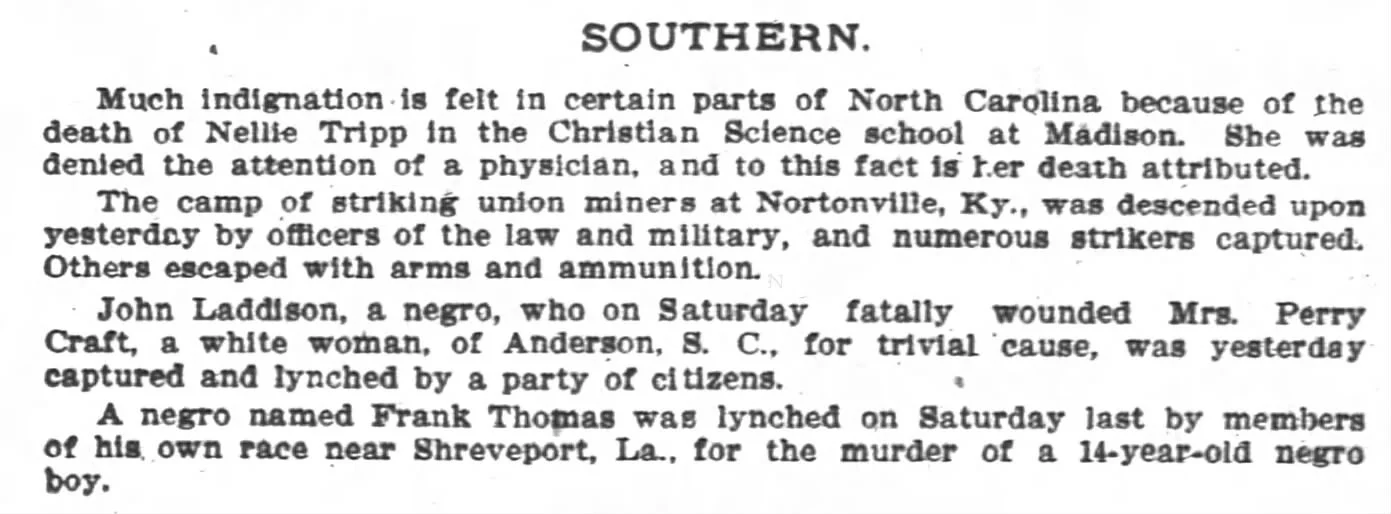
Atlanta Journal Constitution - November 25, 1901 - Page 1
-
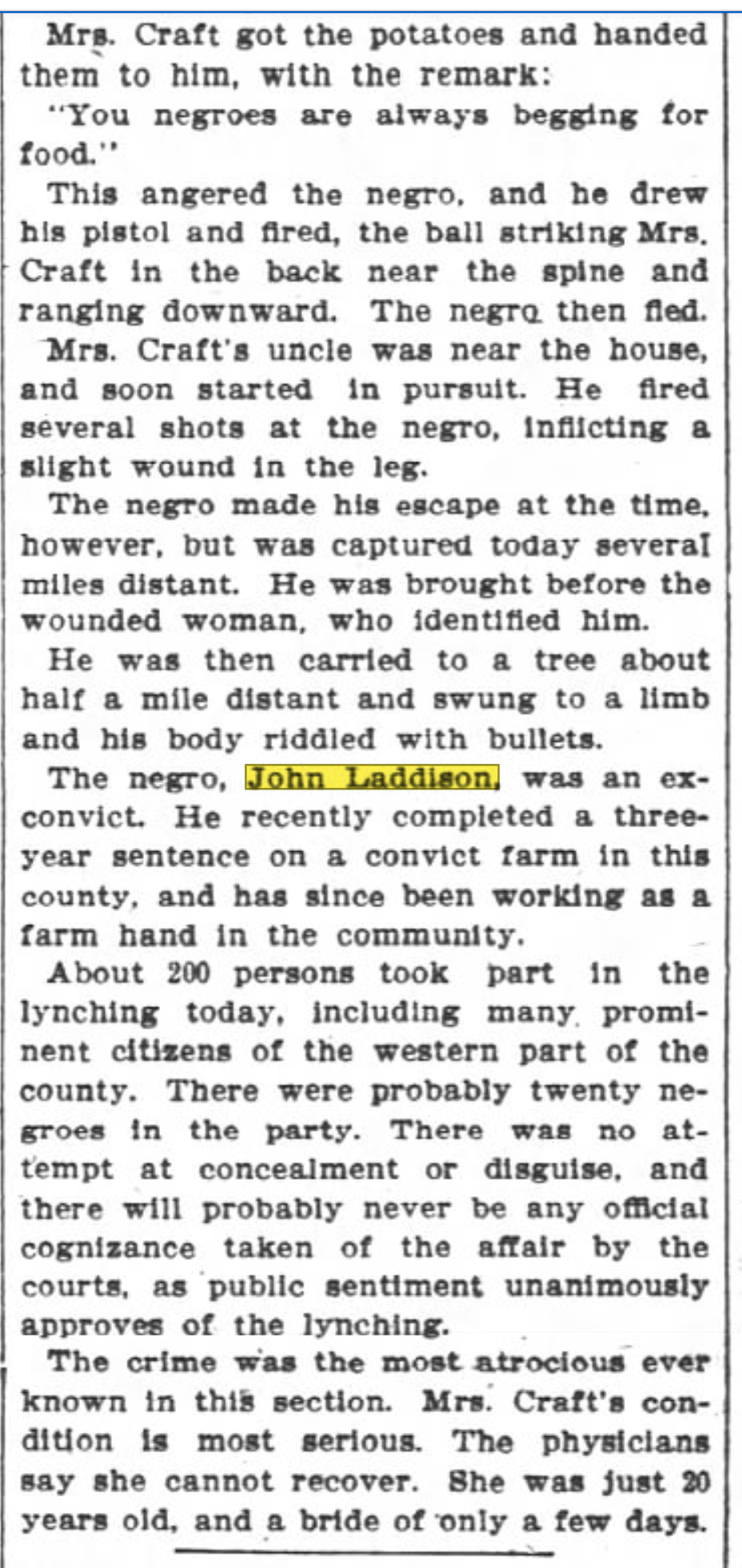
Atlanta Journal Constitution - November 25, 1901 - Page 3
-
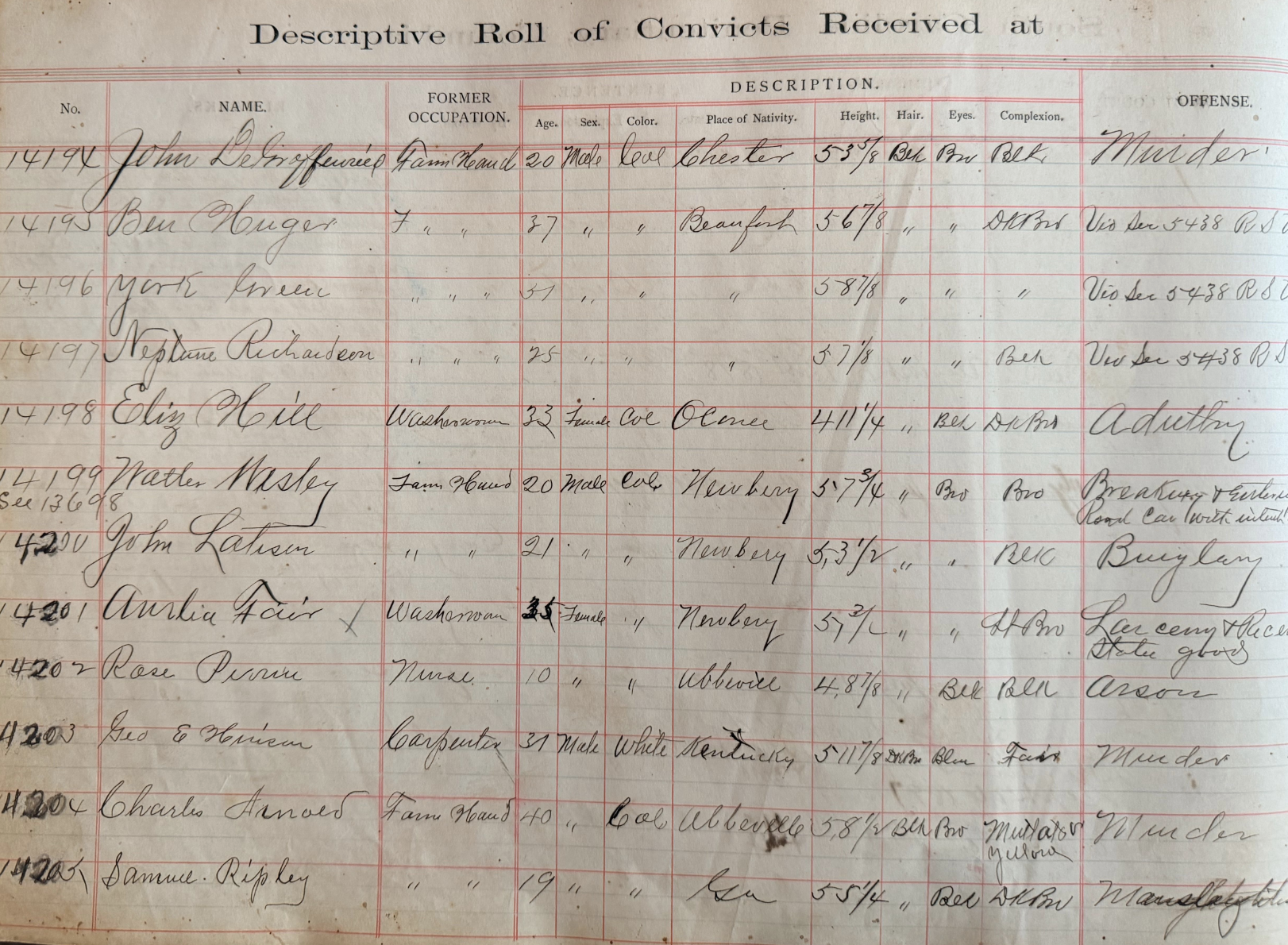
South Carolina Penitentiary Description Roll / Convicts - June 16, 1892 - May 21, 1899
-
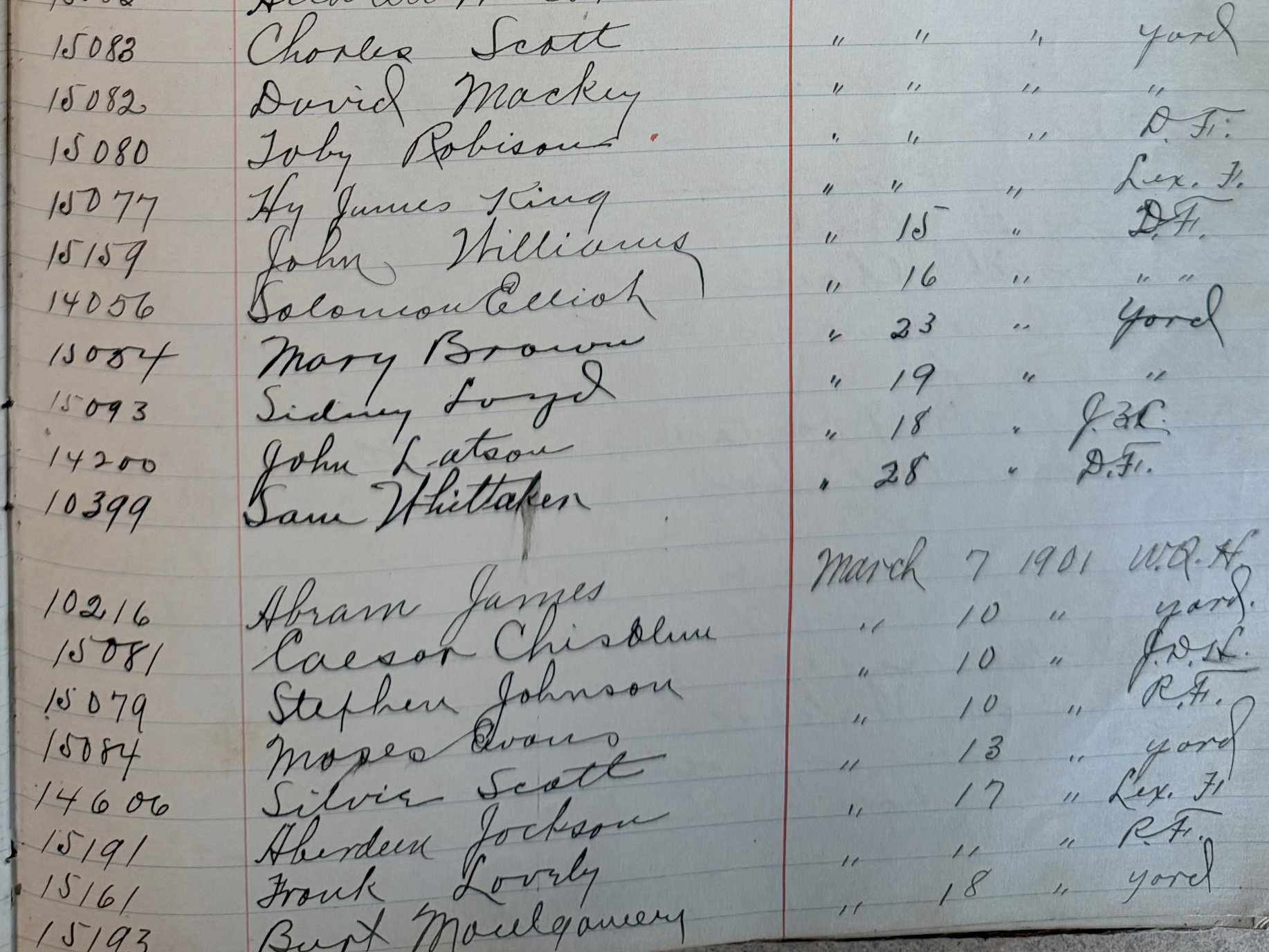
SC Department of Corrections Discharges, Deaths and Escapes 1893-1916
-
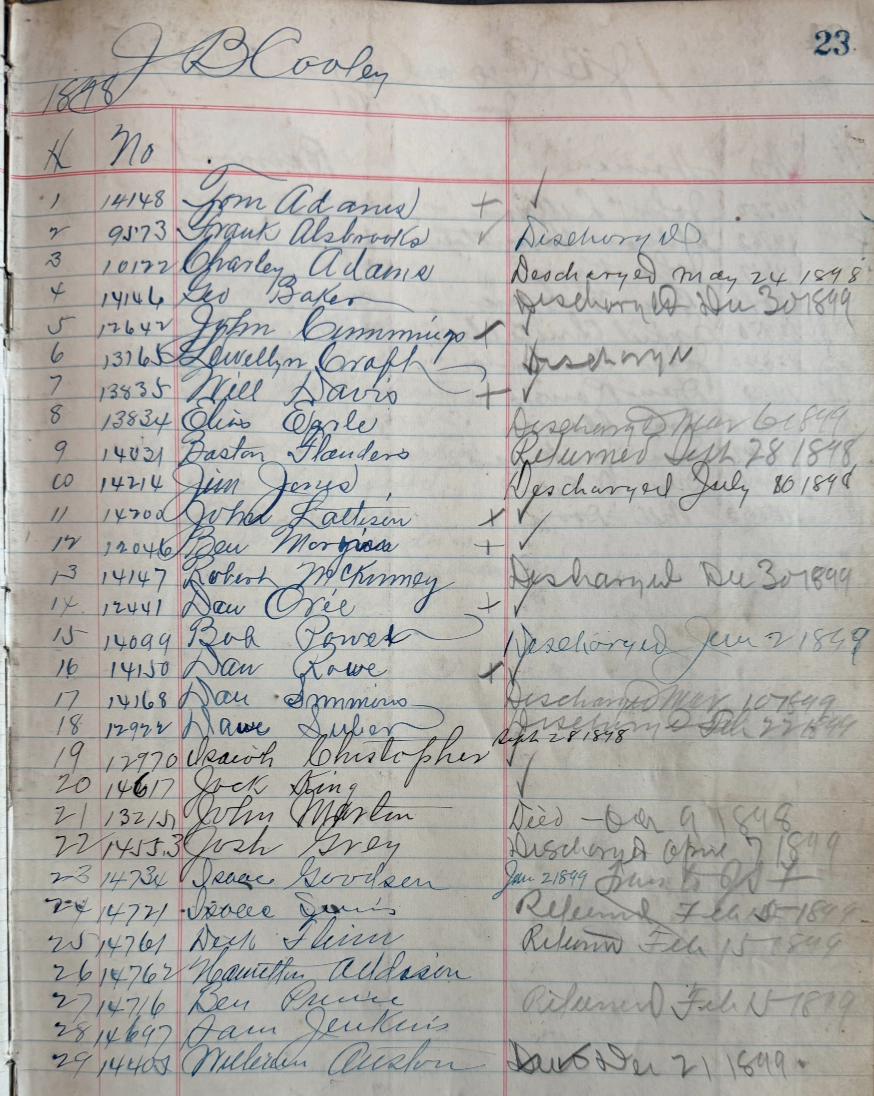
SC Department of Corrections, Farm and Contract Detail Central Registers 1893-1901 (JB Cooley)
References: Articles & External Links
-
Bobby Rettew Substack Article: Following Prisoner 14,200: Finding John Laddison in the Archives - July 27, 2026
This article documents a research conversation with Dr. Rhondda Robinson Thomas that uncovered previously unknown archival records about John Laddison, a young Black man lynched in Anderson County in 1901. The discussion traces new evidence from South Carolina penitentiary records and outlines the next steps in reconstructing Laddison's life before his death.
-
Bobby Rettew Substack Article: The Life and Lynching of John Laddison - October 3, 2025
This article tells the story of John Laddison, a 21-year-old Black man whose life ended in a racial terror lynching in Anderson County, South Carolina, in 1901, drawing from newspaper accounts, court records, and historical archives to reconstruct the events leading to his death. It also examines the broader history of racial violence, the failures of the justice system, and the ongoing work to recover Laddison's story more than a century later.
-
Bobby Rettew Substack Article: The Story of John Laddison: Truth-Telling in Anderson County - October 1, 2025
This article explores the known facts surrounding the life and lynching of John Laddison while separating documented evidence from long-held assumptions and local legend. It examines newspaper accounts, court records, and historical sources to better understand what can & cannot be known about the events leading to his death and why historical truth matters in the work of remembrance.
Remembrance: John Laddison Documentary Storytelling Journey
This story was produced by Anderson University's COM 451 Documentary Storytelling Team in Fall 2025.
Anderson University's COM 451 Documentary Storytelling Team
Brianna Talton: Producer, Editor, Writer
Kylie Hurst: Film Crew
Christina McEwen: Producer, Writer
Drew Cagle: Writer
Jerrod Woods: Film Crew
Joe Hunter Bolen: Editor
Condy Richardson: Writer
Cole Hallmark - Film Crew
Special thanks to:
Mr. Terence Hassan
Dr. Stuart Sprague
Dr. Otis Pickett
Faculty Member / Executive Producer:
Bobby Rettew, MA / COM 451 Instructor
Assistant Professor
Anderson University
Department of Communications
Ground Beneath John Laddison
This story was produced by Anderson University's COM 451 Documentary Storytelling Team in Spring 2026.
Anderson University's COM 451 Documentary Storytelling Team
Ashton Marchbanks - Videographer
Sam Quiambao - Director
Emma Carr - Producer
Kerrick Harper - Editor
r - Editor
Special thanks to:
Dr. Stuart Sprague
Dr. Otis Pickett
Anderson County Museum
Faculty Member / Executive Producer:
Bobby Rettew, MA / COM 451 Instructor
Assistant Professor
Anderson University
Department of Communications
"The end is reconciliation; the end is redemption; the end is the creation of the Beloved Community."
— Dr. Martin Luther King, Jr.